No. Don't drink tap water in Ethiopia, including in Addis Ababa, unless it has been boiled, filtered or otherwise treated. Health advice for travellers is to drink sealed bottled water, avoid ice and brush your teeth with bottled or treated water. Bottled water is sold almost everywhere, and tea and coffee served steaming hot are usually safe.
Get a fixed price for this Ask us for a fixed priceNo. Tap water in Ethiopia, including in Addis Ababa, is not safe for visitors to drink unless it has been boiled, filtered or treated. The standard travel health advice is simple: drink sealed bottled water, skip the ice, and use bottled or treated water to brush your teeth. The good news is that bottled water is easy to buy almost everywhere, and hot tea and coffee, which Ethiopia does very well, are usually safe.
It is one of the first things to sort out when you land. Ethiopia Driver is a family-run private driver service in Addis Ababa: our driver meets you outside Bole arrivals with a name sign and takes you straight to your hotel, so after a long flight you can rest, drink plenty of water and settle in before you explore.
Is tap water in Addis Ababa safe to drink?
Not for visitors. Travel health guidance treats Ethiopia as a country where tap water may be contaminated, and the risk does not stop at the city limits of the capital. Studies in Addis Ababa show why. Piped supply in parts of the city is often interrupted, households store water in containers, and germs were found in much of that stored water. A 2023 study of kindergartens found that 16 of 38 water samples had less chlorine than the World Health Organization recommends.
Several illnesses that travellers can catch from food and water are present in Ethiopia, including hepatitis A, typhoid and cholera, which is widespread in Ethiopia at the moment. For most travellers who are careful with food and water, the risk of cholera is low. Hepatitis A and typhoid vaccines are recommended for most trips; our guide to vaccines for Ethiopia explains which you need.
What should you drink instead?
- Sealed bottled water. Sold in shops, hotels and cafés almost everywhere, in small and large bottles. Check that the seal is intact before you open it, because fake bottled water exists.
- Sparkling water and soft drinks in factory-sealed bottles or cans.
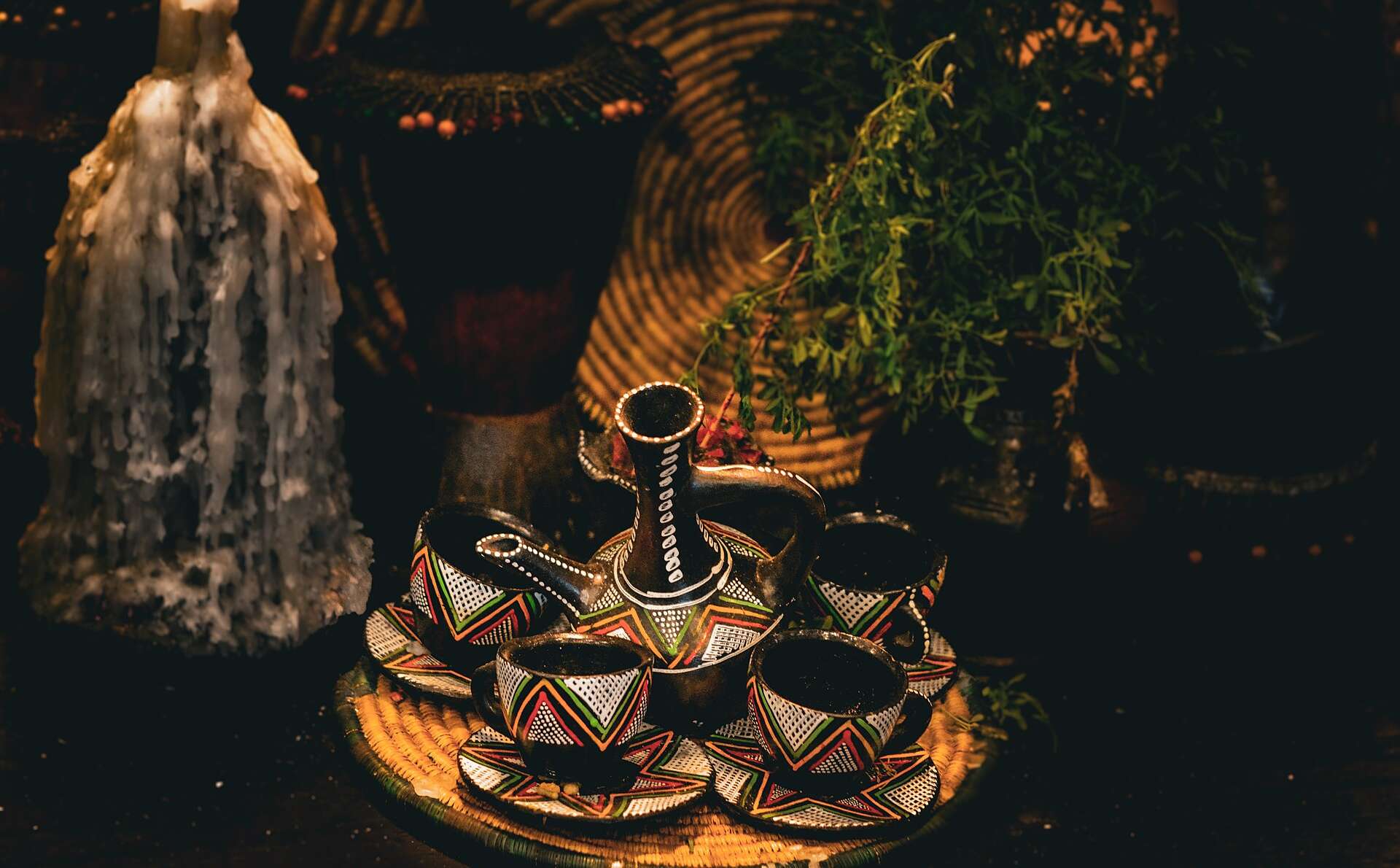
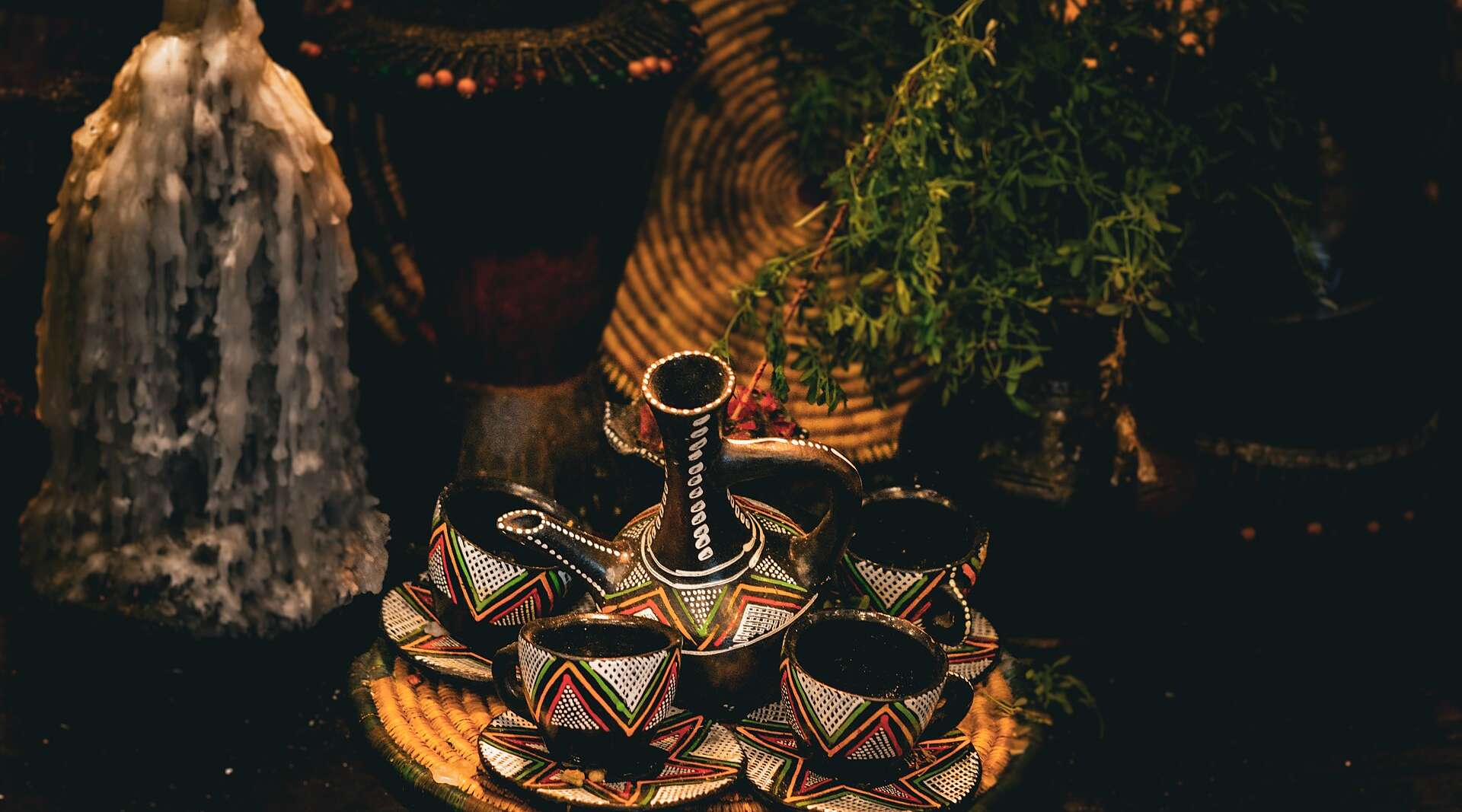
- Hot coffee and tea. Drinks served steaming hot are usually safe. In a traditional coffee ceremony, the coffee is boiled in a clay pot called a jebena.
- Boiled water. Bring it to a rolling boil. At Addis Ababa's altitude, play it safe and keep it boiling for three minutes rather than one.
- Filtered or treated water. A good filter bottle, used with chlorine dioxide tablets, is a sensible back-up and cuts down on plastic bottles.
What about ice, juice and brushing your teeth?
- Ice: avoid it unless you are sure it was made from safe water.
- Fresh juices and smoothies: they may be thinned with water or served with ice. Ask, or save them for places you trust.
- Brushing your teeth: use bottled or treated water. Keep a bottle by the sink so you don't reach for the tap without thinking.
- Showers: washing is fine, but keep your mouth closed and don't swallow the water.
What food is safest?
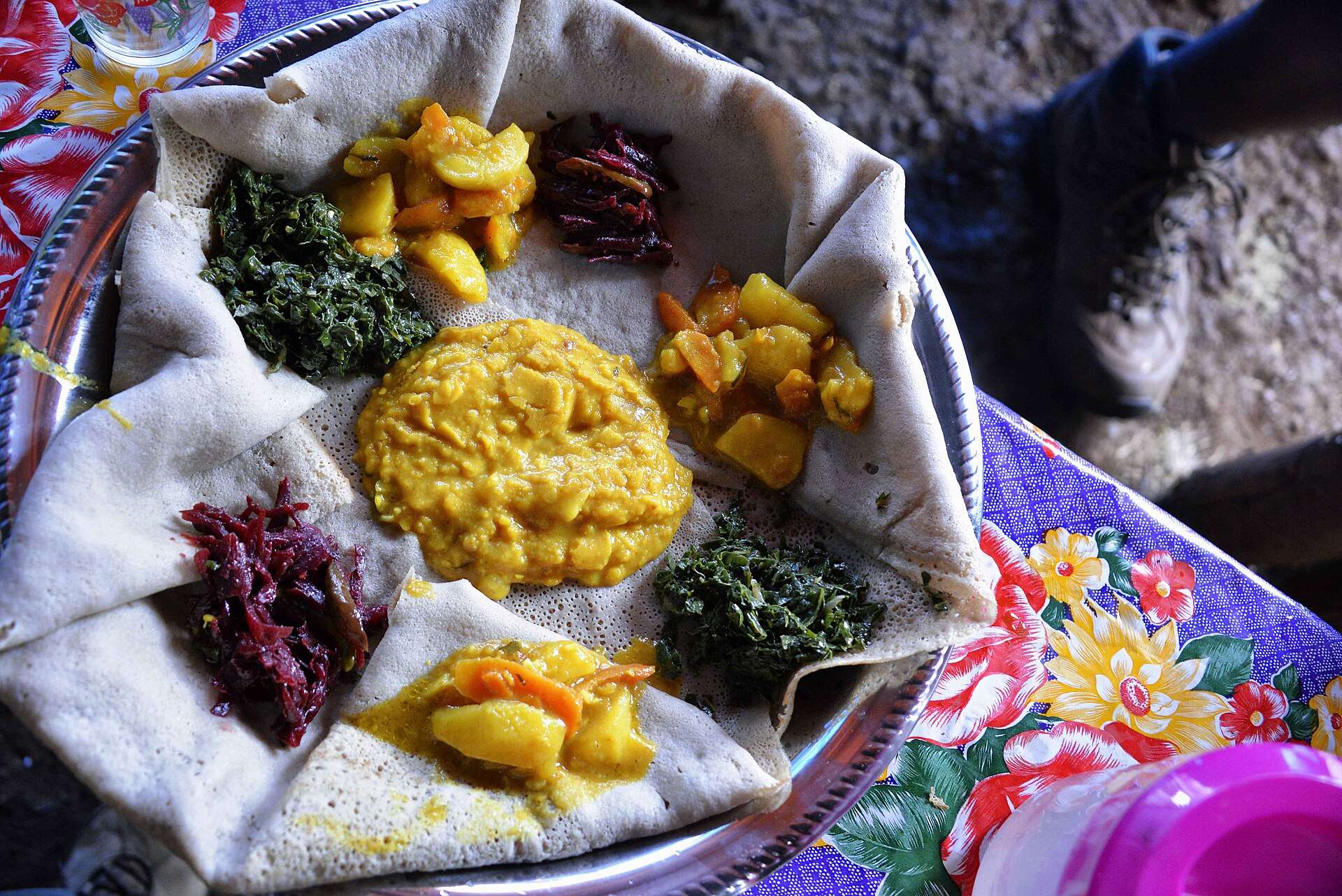
Food that is freshly cooked and served hot. Most Ethiopian meals fit that well: stews (wat) cooked through and served on injera, the spongy sourdough flatbread. On fasting days, when devout Orthodox Christians eat no animal products, vegetarian dishes such as shiro, a bean-based stew, are everywhere, and they are cooked through too. Our guide to Ethiopian food to try has more ideas.
- Raw salads are usually washed in tap water, so skip them where you are unsure.
- Fruit you peel yourself, such as bananas and oranges, is a safe snack.
- Raw meat: kitfo, minced beef, is traditionally eaten raw or only lightly cooked. Eating raw beef is linked to tapeworm infections in Ethiopia, so ask for it well cooked.
- Dairy: stick to pasteurised milk and yoghurt.
- Hands: injera is eaten with the right hand, tearing off pieces to scoop up the stew, so wash your hands or use hand gel before every meal.
- Buffets: avoid food that has been sitting out uncovered in the warm.
How much water should you drink in Addis Ababa?
More than you might at home. Addis Ababa sits at about 2,355 m, and drinking enough to avoid dehydration is one of the basic tips for adjusting to altitude, along with going easy on alcohol for the first day or two. For most healthy visitors the effects are mild; our guide to altitude in Addis Ababa covers the rest.
A practical routine: buy a few large bottles on your first day, keep one in your room and one in your bag, and refill a smaller bottle from them. With a driver by the day, the car drops you at the door of each stop and waits, so a quick stop at a shop for water is easy, and you are not carrying heavy bottles across town.
Is holy water or lake water safe?
No, not to drink. Holy water from springs and church wells is sacred to many Ethiopians, but it is not treated drinking water. In early 2025, cholera cases in the UK and Germany were traced to holy water from a well in Ethiopia, some of which travellers had carried home in bottles. If you visit a holy site, take part respectfully without drinking the water, and don't bring any home.
Lakes and rivers carry a different risk: schistosomiasis (bilharzia), a parasite caught from fresh water. Avoid swimming or wading in lakes, ponds and rivers, even at the lovely Rift Valley lakes south of Addis. On a whole-car trip to Bishoftu or Hawassa, which we drive regularly, enjoy the views from the shore and bring plenty of bottled water for the road.
What if you get an upset stomach?
Travellers' diarrhoea is the most common travel illness, and it usually clears up by itself within three to four days. Keep drinking safe fluids, and use oral rehydration salts if it is more than mild; pack a few sachets before you leave home. See a doctor if it has not improved after three days, or straight away if you have a fever of 38°C or more, blood in your stool, or you can't keep fluids down. In Addis Ababa, private hospitals offer the best standard of care.
Questions people ask us
Is tap water safe to drink in Addis Ababa?+−
No. Visitors should not drink tap water in Addis Ababa unless it has been boiled, filtered or treated. Drink sealed bottled water instead; it is sold almost everywhere.
Can I brush my teeth with tap water in Ethiopia?+−
It is safer not to. Travel health advice is to brush your teeth with bottled or treated water in Ethiopia.
Is ice safe in Ethiopia?+−
Avoid ice unless you know it was made from safe water. Drinks from sealed bottles and cans are the safer choice.
Is Ethiopian coffee safe to drink?+−
Yes, usually. Coffee and tea served steaming hot are generally safe, and in a traditional coffee ceremony the coffee is boiled in a jebena.
How do I boil water to make it safe at altitude?+−
Bring it to a rolling boil. In Addis Ababa, which is above 2,000 m, boil it for three minutes to be safe, then let it cool in a clean, covered container.
Can someone meet me at Bole airport and take me to my hotel?+−
Yes. Ethiopia Driver meets you outside Bole arrivals with a name sign and drives you to your hotel, and we can book the hotel for you in birr. You get one fixed quote by WhatsApp or email and pay in US dollars or your own currency.
Sources
We checked this answer against these pages on 23 October 2026. Rules and advice change, so check official sources before you travel.
- Food and water safety · US Centers for Disease Control and Prevention
- Ethiopia: traveler view · US Centers for Disease Control and Prevention
- Boil water advisory · US Centers for Disease Control and Prevention
- Food and water hygiene · TravelHealthPro (UK National Travel Health Network and Centre)
- Ethiopia · TravelHealthPro (UK National Travel Health Network and Centre)
- Travellers' diarrhoea · TravelHealthPro (UK National Travel Health Network and Centre)
- Ethiopia travel advice: health · UK Foreign, Commonwealth & Development Office
- Travel advice and advisories for Ethiopia: health · Government of Canada
- Altitude sickness · NHS
- Piped water supply interruptions and acute diarrhea among under-five children in Addis Ababa slums, Ethiopia: a matched case-control study (Adane et al., 2017) · PLOS ONE
- Bacterial contamination of school's drinking water in Addis Ababa, Ethiopia (Debebe and Getaneh, 2023) · Zede Journal of Ethiopian Engineers and Architects (Addis Ababa University)
- Cholera due to exposure in Europe associated with consumption of holy water from Ethiopia, January to February 2025 · UK Health Security Agency / Eurosurveillance
- Patients with multi-drug resistant cholera in Europe linked to exposure to contaminated holy water from Ethiopia · The Microbiologist
- Identification of risk areas and practices for Taenia saginata taeniosis/cysticercosis in Ethiopia (Jorga et al., 2020) · Parasites & Vectors
- Ethiopia travel guide (Stay healthy) · Wikivoyage
- Addis Ababa (elevation) · Wikipedia
- Kitfo · Wikipedia
- Jebena · Wikipedia
Written by Abel Gizaw, Addis Ababa. Abel schedules our drivers. A family-run driver service. We only write about roads we drive ourselves and we update these answers regularly. Something changed? Tell us on WhatsApp.