The rock-hewn churches of Lalibela, and what current travel advice says about getting there.
3 answers
Lalibela takes its name from King Gebre Meskel Lalibela of the Zagwe dynasty, who ruled from around 1181 to 1221; the town was earlier called Roha. By tradition the king set out to build a 'New Jerusalem' in Ethiopia, and many historians link this to Saladin's capture of Jerusalem in 1187, which made pilgrimage to the Holy Land much harder. Names around the site echo Jerusalem: the seasonal stream running through it is called the Jordan.
Rather than being built up from blocks, the churches were cut downwards into the living rock, leaving free-standing buildings with doors, windows, columns and roofs, joined by trenches, tunnels and ceremonial passages. Local tradition says angels worked through the night to help finish them within the king's reign. Some archaeologists, including David Phillipson, believe parts of the complex are older and that the churches took shape in several phases, perhaps over centuries.
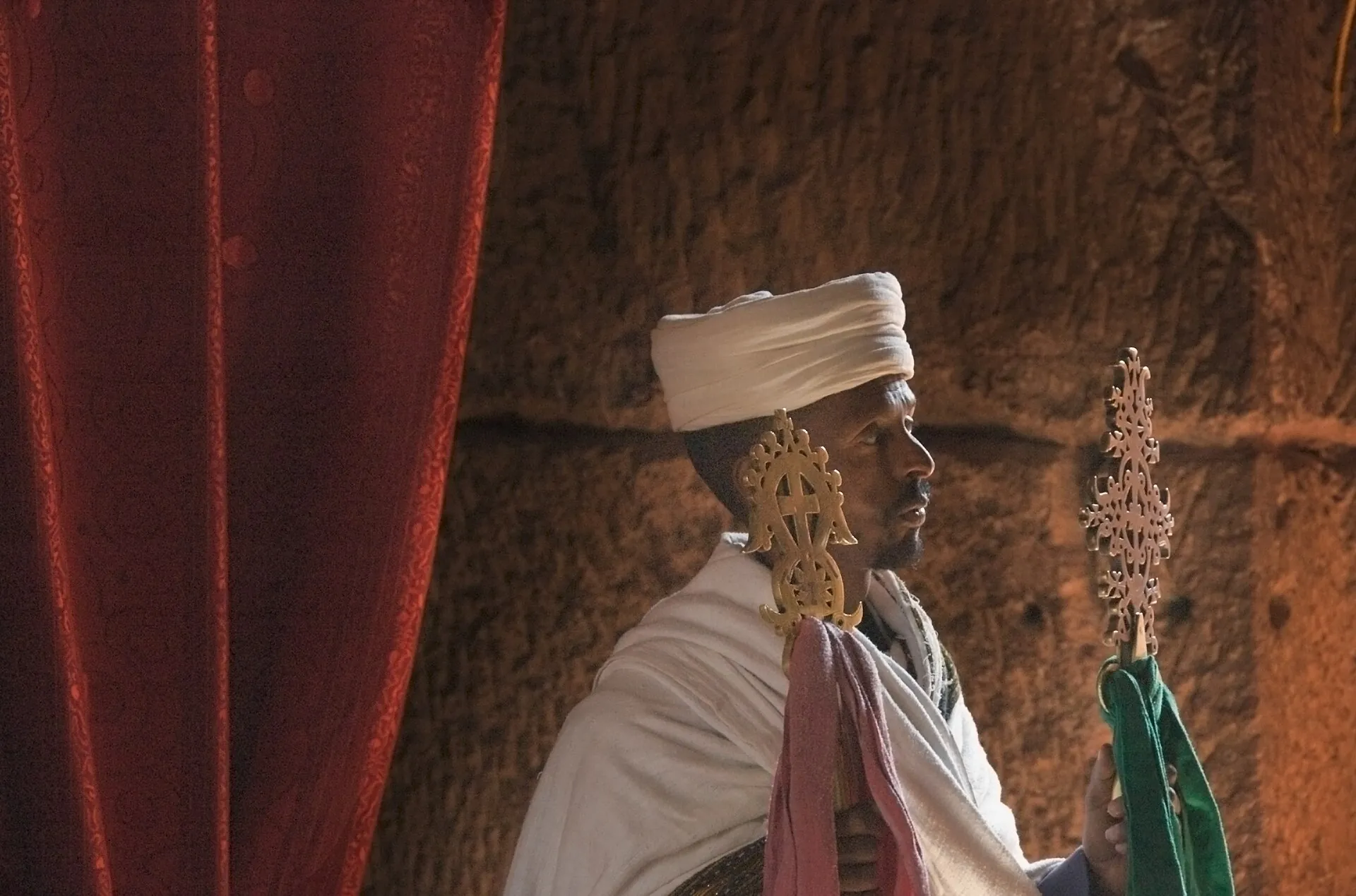
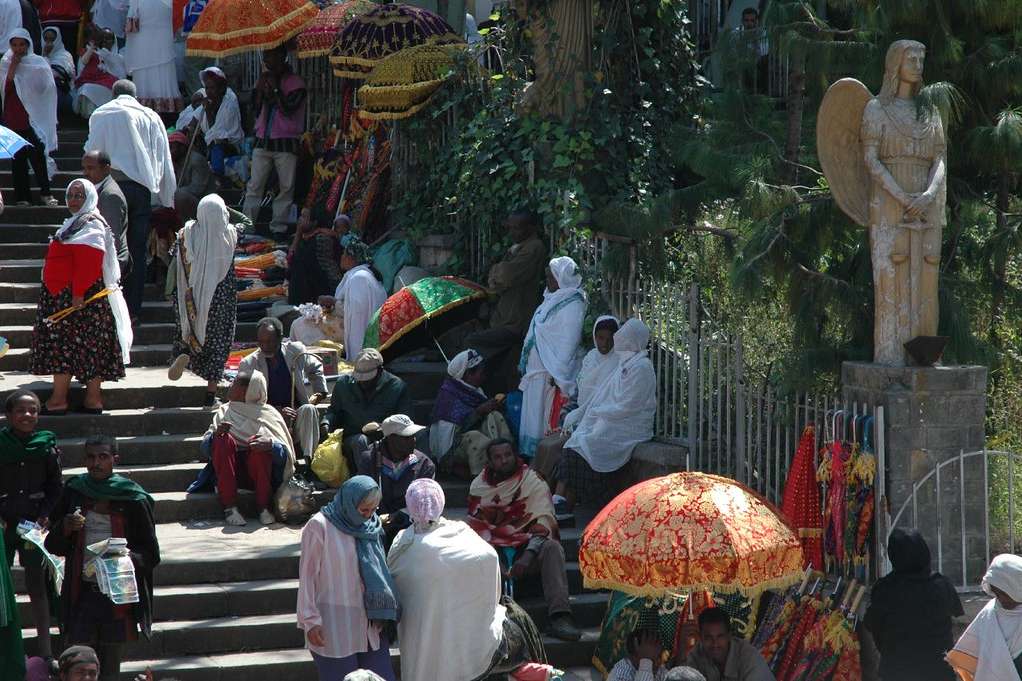
In the 1520s the Portuguese priest Francisco Álvares visited and wrote that he feared readers would not believe his descriptions. UNESCO inscribed the churches as a World Heritage Site in 1978. Lalibela is still a living holy town, home to a large community of priests and monks, and Ethiopian Orthodox pilgrims gather here in great numbers for the feasts of Genna (Christmas) and Timkat (Epiphany).
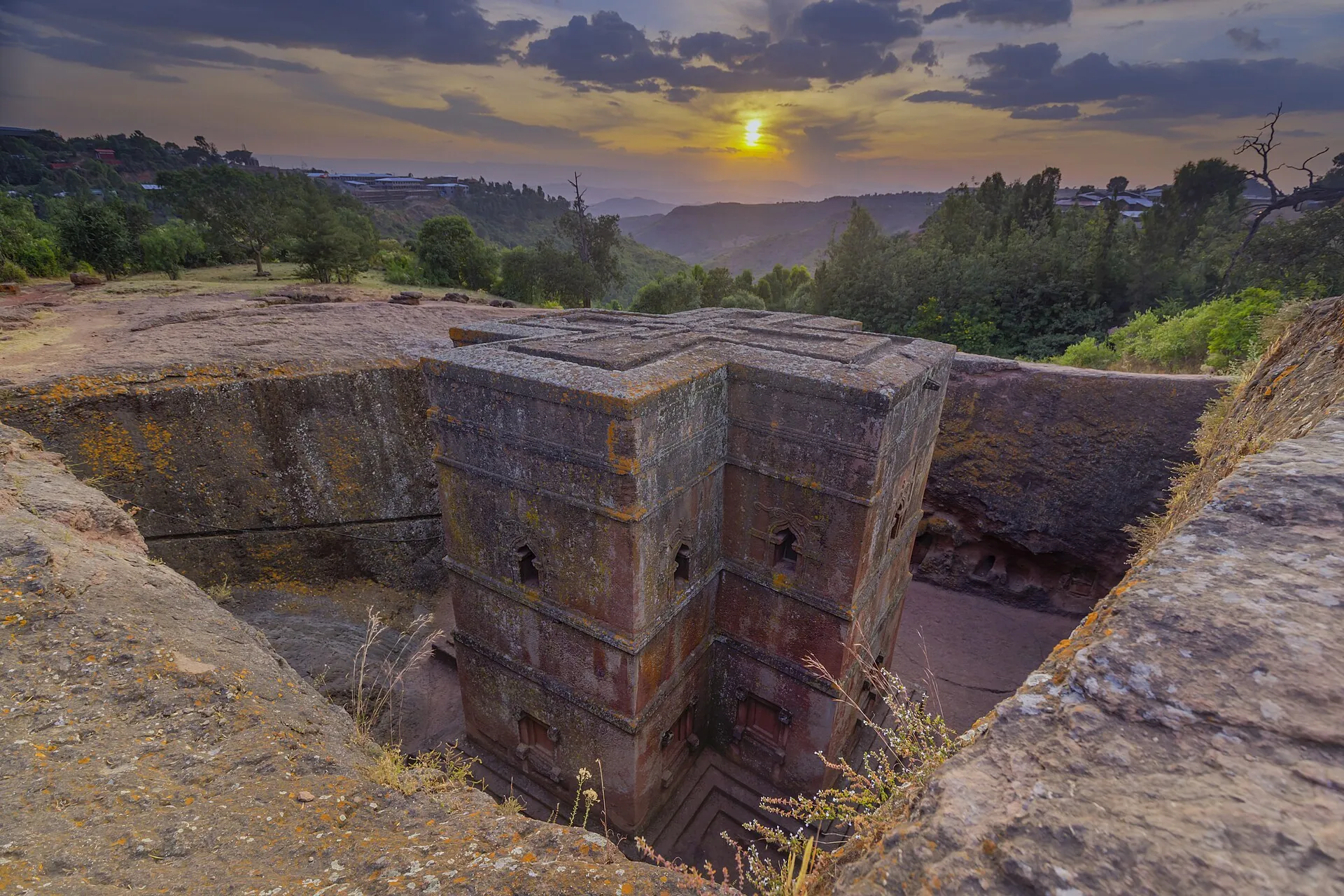
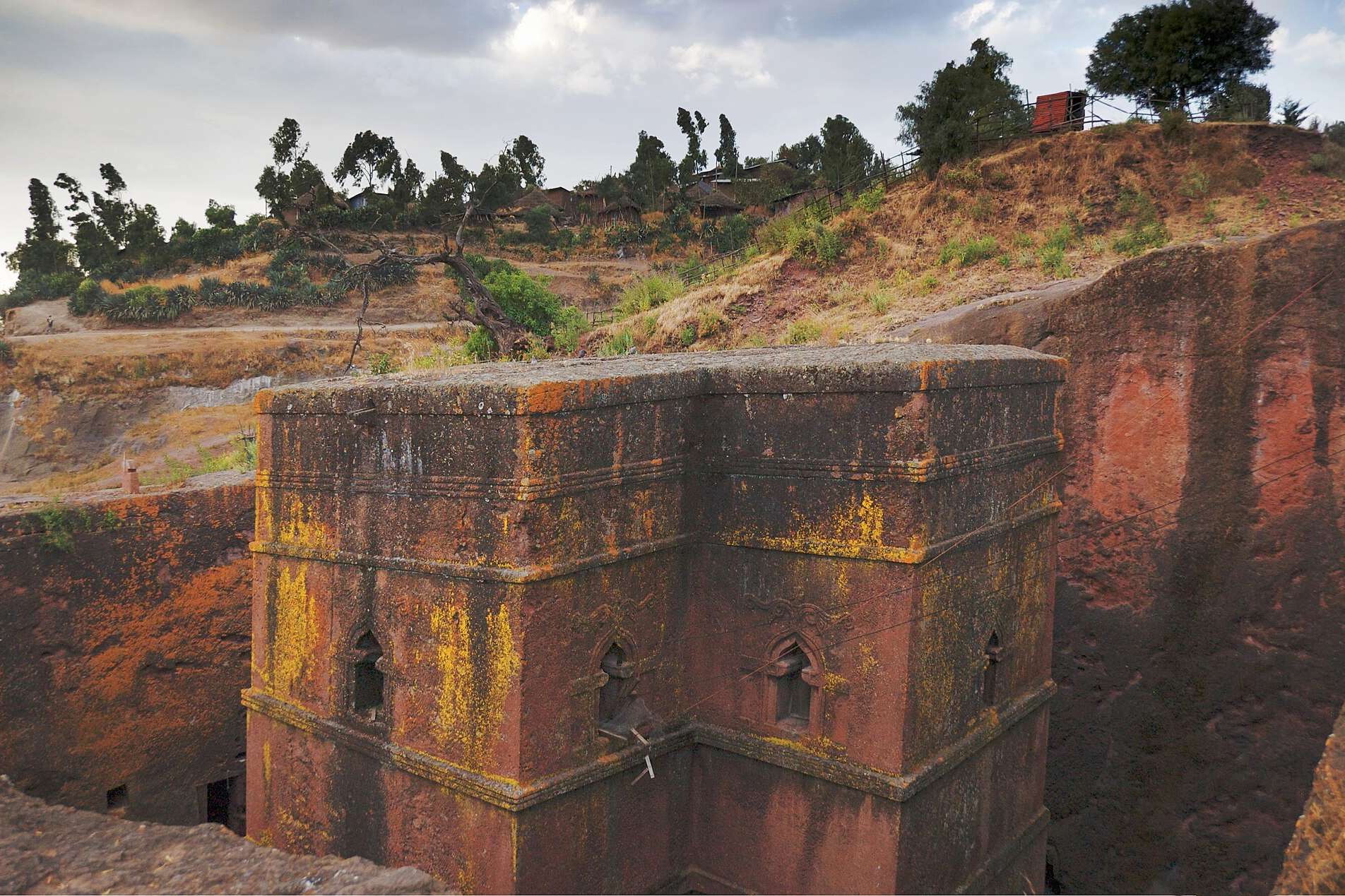
Set apart from the other churches, it is carved in the shape of a cross and stands in a deep pit. You first look down on its cross-shaped roof, then walk down a trench to reach the door.
The 'House of the Saviour of the World' has five aisles and is believed to be the largest monolithic church in the world, ringed by rows of rock-cut columns.
In the northern group, Bete Maryam has carvings and painted interiors, while Golgotha holds replicas of Christ's tomb and, by tradition, the tomb of King Lalibela.
Across the 'Jordan', Bete Amanuel, Bete Merkorios, Bete Abba Libanos and Bete Gabriel-Rufael are linked by trenches and dark tunnels; two of them may once have been royal residences.
Near the churches stand traditional two-storey round houses of local red stone, part of the old village layout that UNESCO counts as part of the site's value.
A monastery on the flat-topped mountain above town, reached on foot, with wide views over the Lasta highlands.
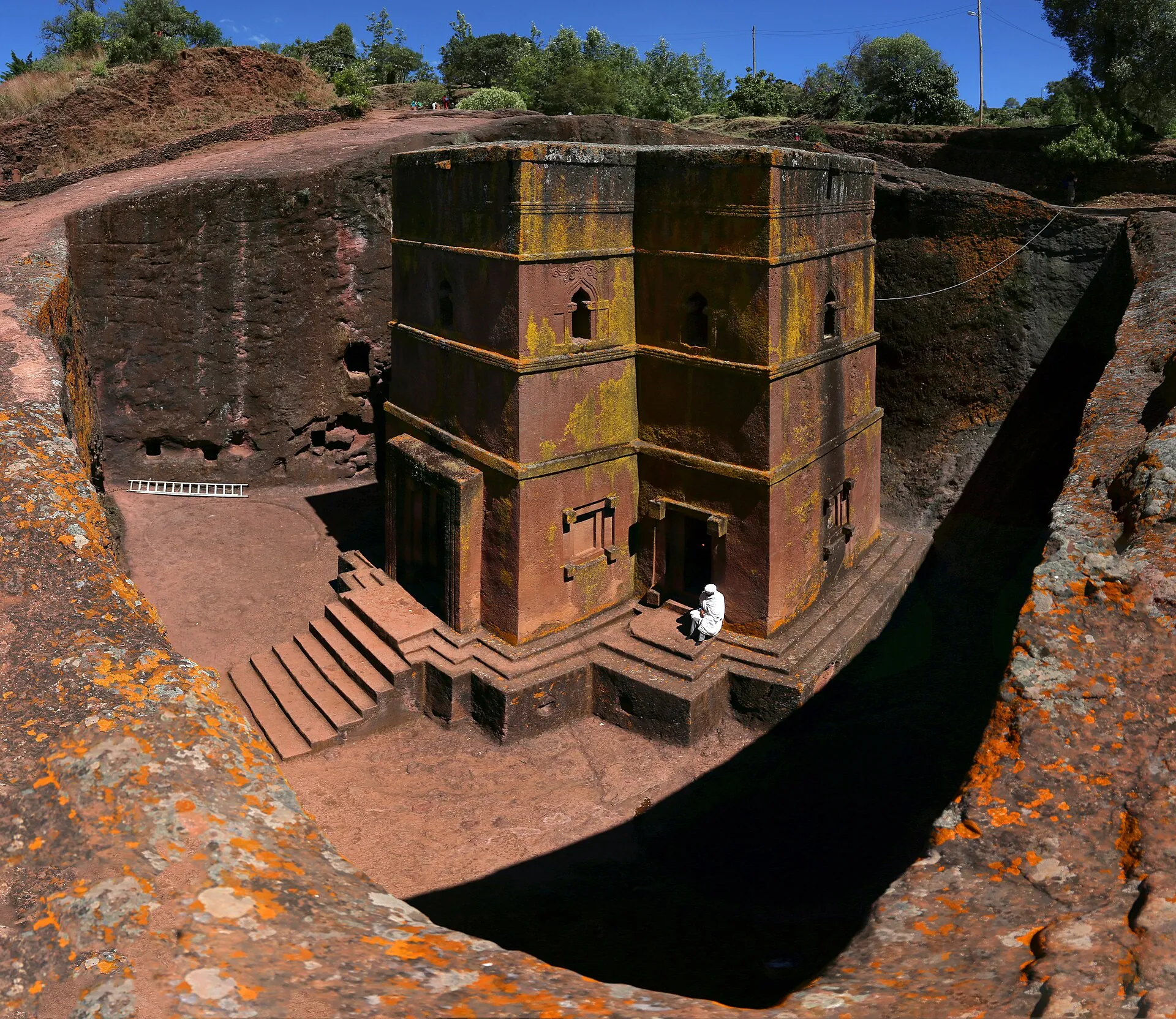
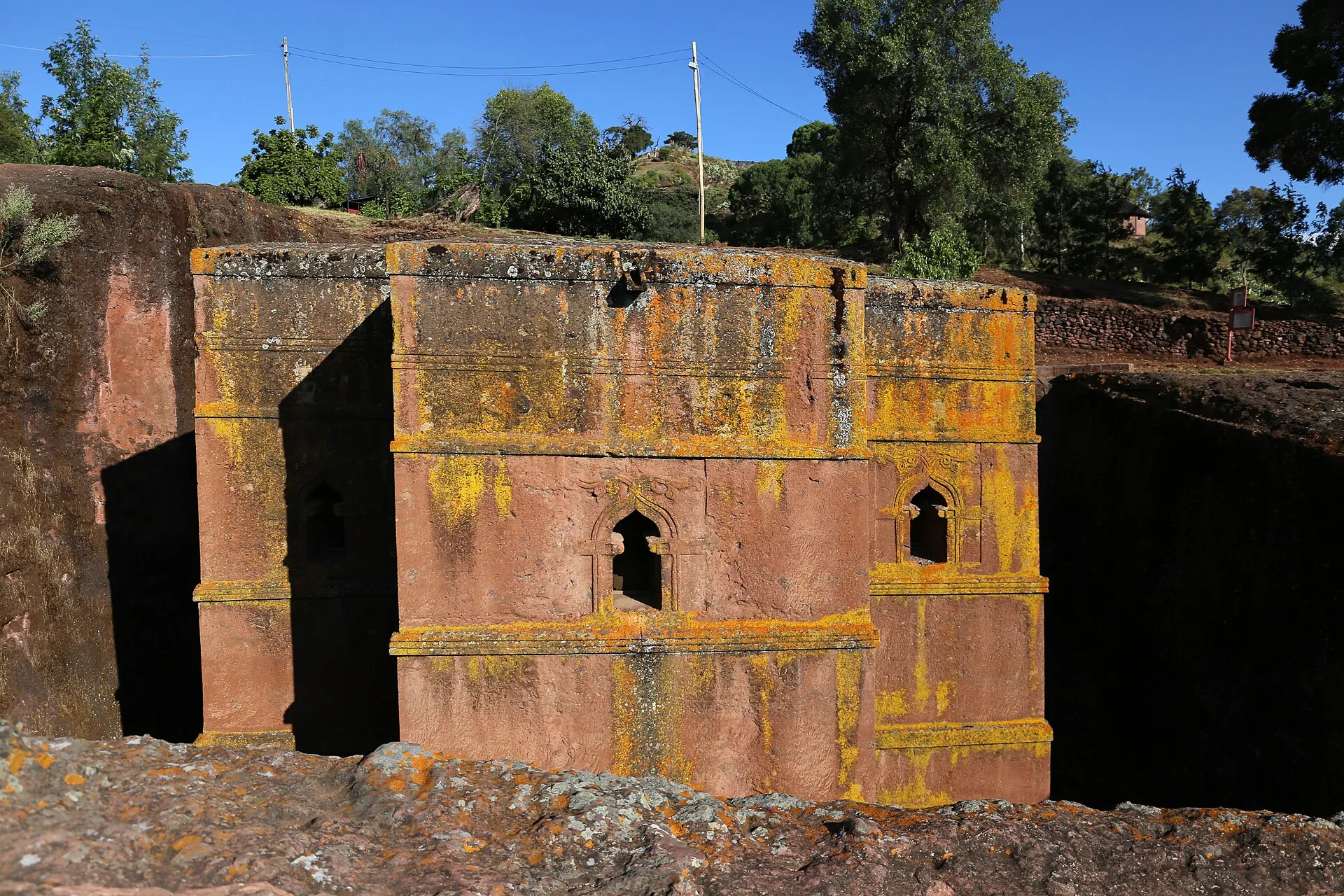
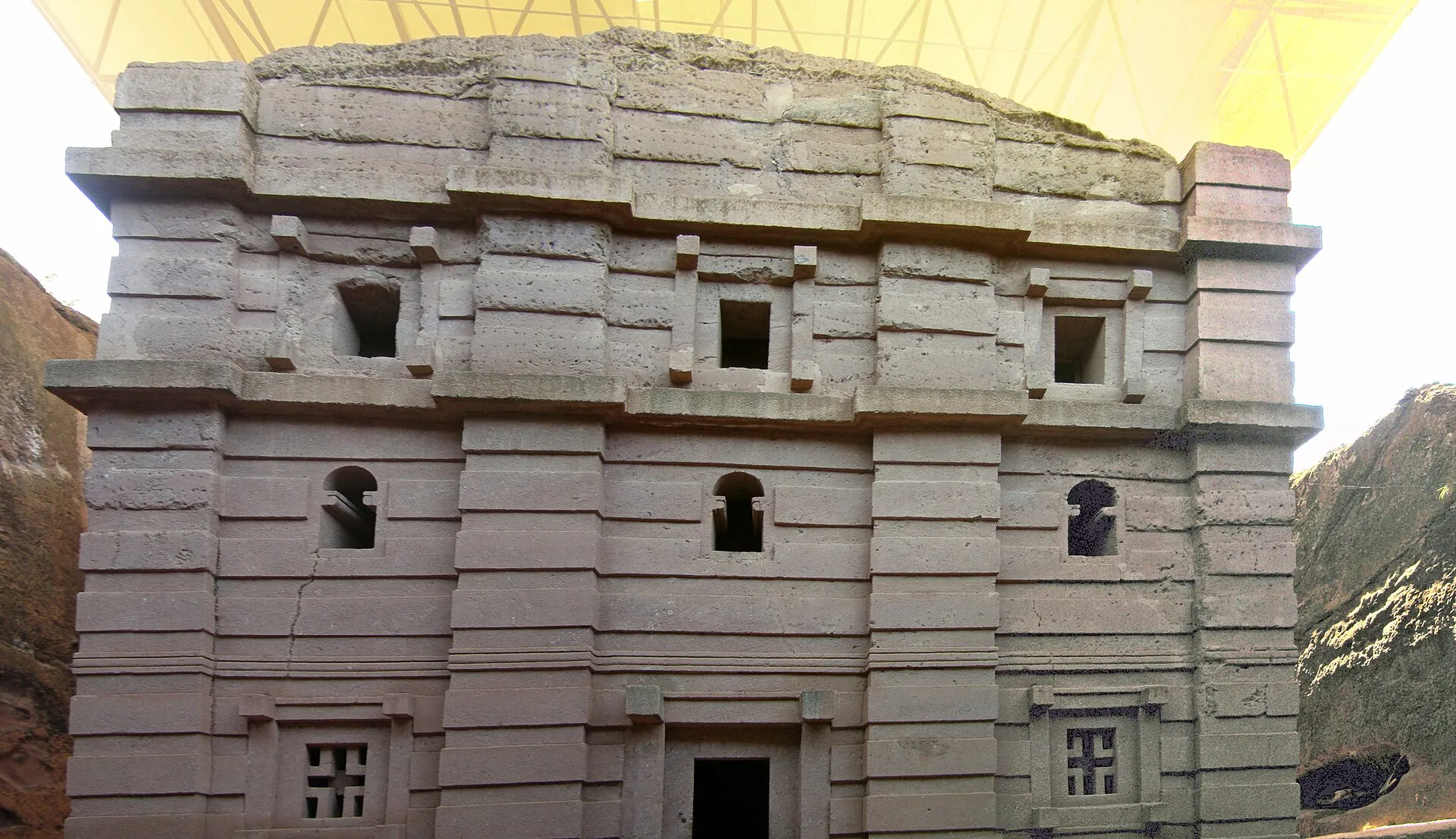
Its eleven rock-hewn churches, traditionally dated to the reign of King Lalibela in the late 12th and early 13th centuries and listed by UNESCO in 1978.
Each was carved downwards out of a single mass of rock, with the doors, windows, columns and interiors cut out by hand rather than built from blocks.
Genna (Ethiopian Christmas) on 7 January and Timkat (Epiphany) around 19 January, when services and processions draw large crowds of pilgrims.
 Is it safe
Not at the moment. As of 10 October 2026, flights to Lalibela are still suspended (since 24 September, because of fighting nearby) with no restart date announced, and official travel advice warns against all travel to Amhara region, which includes Lalibela. Postpone rather than cancel: the rock-hewn churches will still be there. In the meantime you can see Ethiopian Orthodox church life in Addis Ababa, and Bishoftu and Hawassa make good alternatives.
Updated Oct 2026 · 5 min
 What to expect
Timkat, the Ethiopian Orthodox celebration of Christ's baptism (Epiphany), falls on 19 January in most years and 20 January in Gregorian leap years. In 2027 the eve, Ketera, is Monday 18 January, Timkat is Tuesday 19 January, and St Michael's churches hold their processions on 20 January. The easiest big celebration for visitors to reach right now is at Jan Meda in Addis Ababa. Gondar and Lalibela are famous for Timkat but are in Amhara, where travel isn't advised as of late September 2026.
Updated Sept 2026 · 6 min
 What to expect
Ethiopian Christmas, called Genna, is celebrated on 7 January (29 Tahsas in the Ethiopian calendar), the same day as other Orthodox churches that follow the Julian reckoning. The next Genna is Thursday 7 January 2027. For many Orthodox Christians it ends a roughly six-week fast, starts with an all-night church service on Christmas Eve and continues with a family feast of doro wat and injera. Lalibela, the famous Genna pilgrimage, is in Amhara, where travel isn't advised as of September 2026.
Updated Sept 2026 · 6 min
Going to Lalibela? Tell us where.
One fixed price for the whole car, from a real person.One fixed quote for the whole car, from a real person, on WhatsApp.