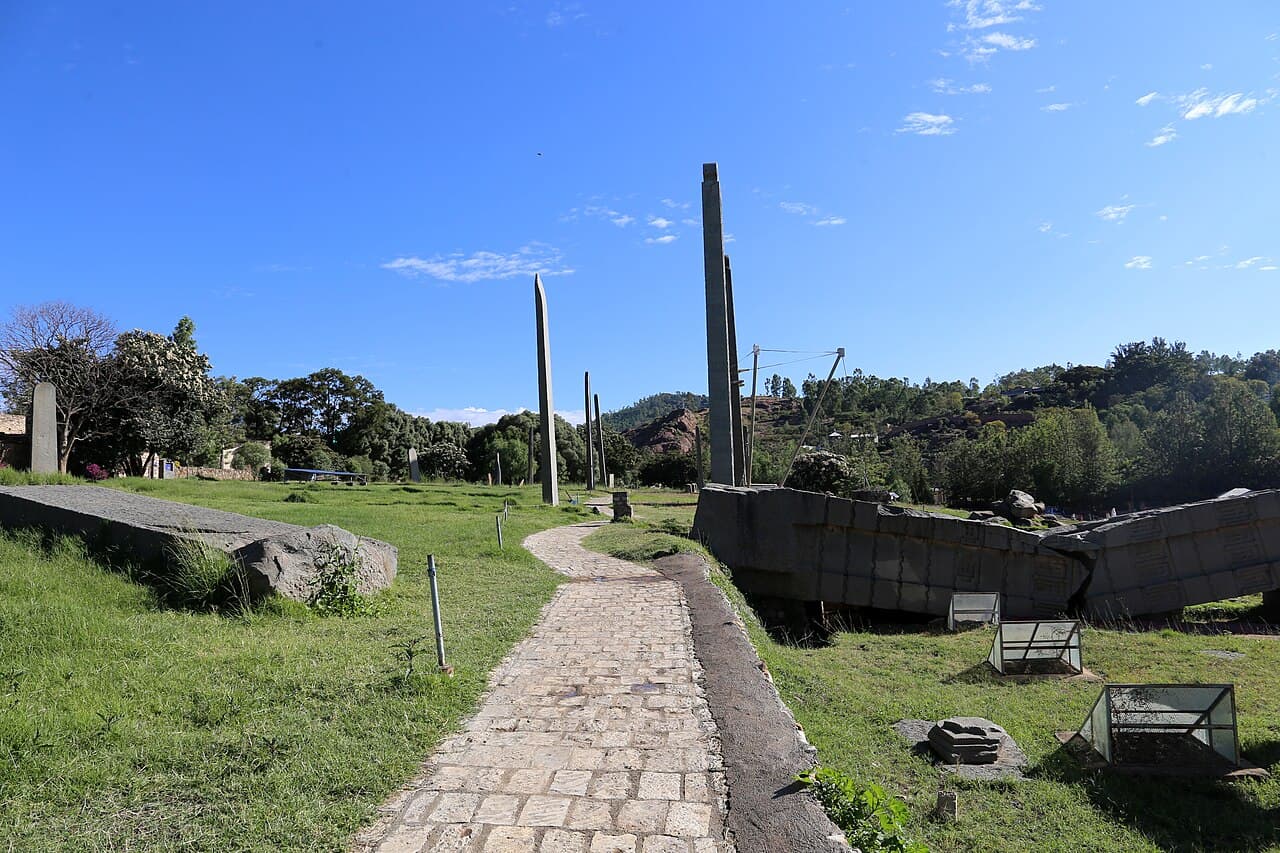
The ancient capital of the Aksumite kingdom in northern Ethiopia, known for its giant carved granite stelae and as the holiest place of the Ethiopian Orthodox Church.
2 answers
Aksum was the capital of a powerful kingdom that flourished from around the 1st to the 8th centuries AD. Trading through the Red Sea port of Adulis, in goods such as ivory, it was linked to Arabia and the Greco-Roman world and minted its own coins; a 1st-century Greek sailing guide already called it a 'metropolis'. UNESCO describes it as the most powerful state between the Eastern Roman Empire and Persia.
In the 4th century King Ezana adopted Christianity, and his inscriptions in Greek, Sabaean and Ge'ez can still be seen in the town. The Aksumites raised huge granite stelae as grave markers, the finest carved to look like multi-storey buildings with doors and windows. The largest, about 33 metres long, lies broken where it fell, perhaps while it was being put up, and may be the biggest single stone people ever tried to stand.
After the capital moved south, Aksum remained Ethiopia's spiritual centre, and emperors such as Zara Yaqob came here to be crowned. Ethiopian Orthodox tradition holds that the Ark of the Covenant is kept in a chapel beside the Church of St Mary of Zion, and local legend makes Aksum the home of the Queen of Sheba. One stele, taken to Rome in 1937, was returned in 2005 and re-erected in 2008. UNESCO listed Aksum in 1980.
The main field of stelae, where King Ezana's stele (about 24 m) still stands beside the re-erected Obelisk of Aksum and the fallen Great Stele, with royal tombs below ground and a museum.
The old church, rebuilt in the 17th century by Emperor Fasilides, is open only to men; the neo-Byzantine new cathedral, begun in 1955, is open to all. Between them is the chapel said to hold the Ark.
A 4th-century stone inscription recording King Ezana's deeds in three scripts, often compared to the Rosetta Stone.
The excavated foundations, stairways and walls of a large Aksumite mansion. Locals link it to the Queen of Sheba, though it was built many centuries after her time.
A large reservoir, possibly dating back to Aksumite times, that local tradition links with the queen.
A small monastery on a rocky outcrop just outside town, by tradition dating from the 6th century, with wide views over the Adwa mountains.
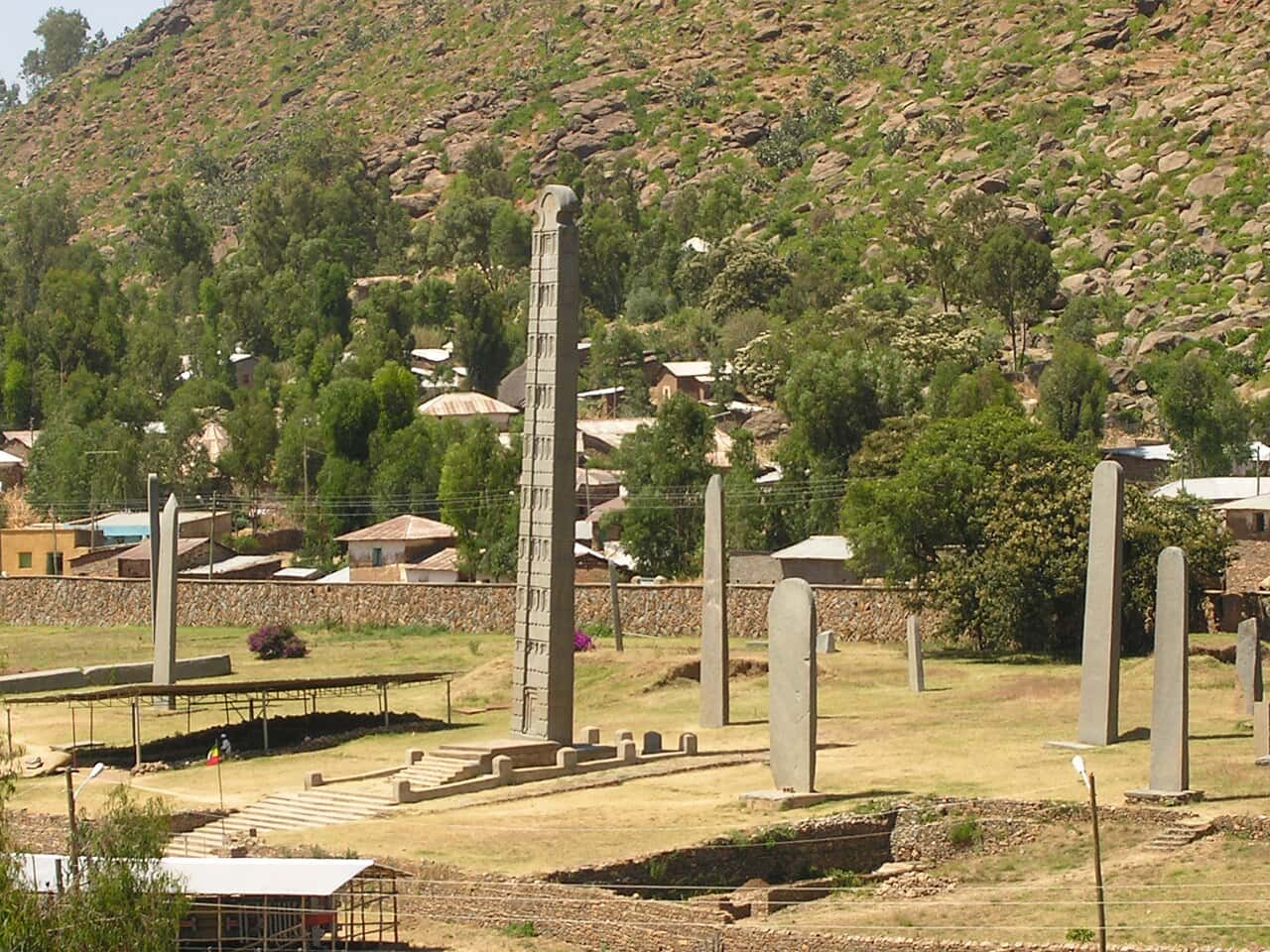
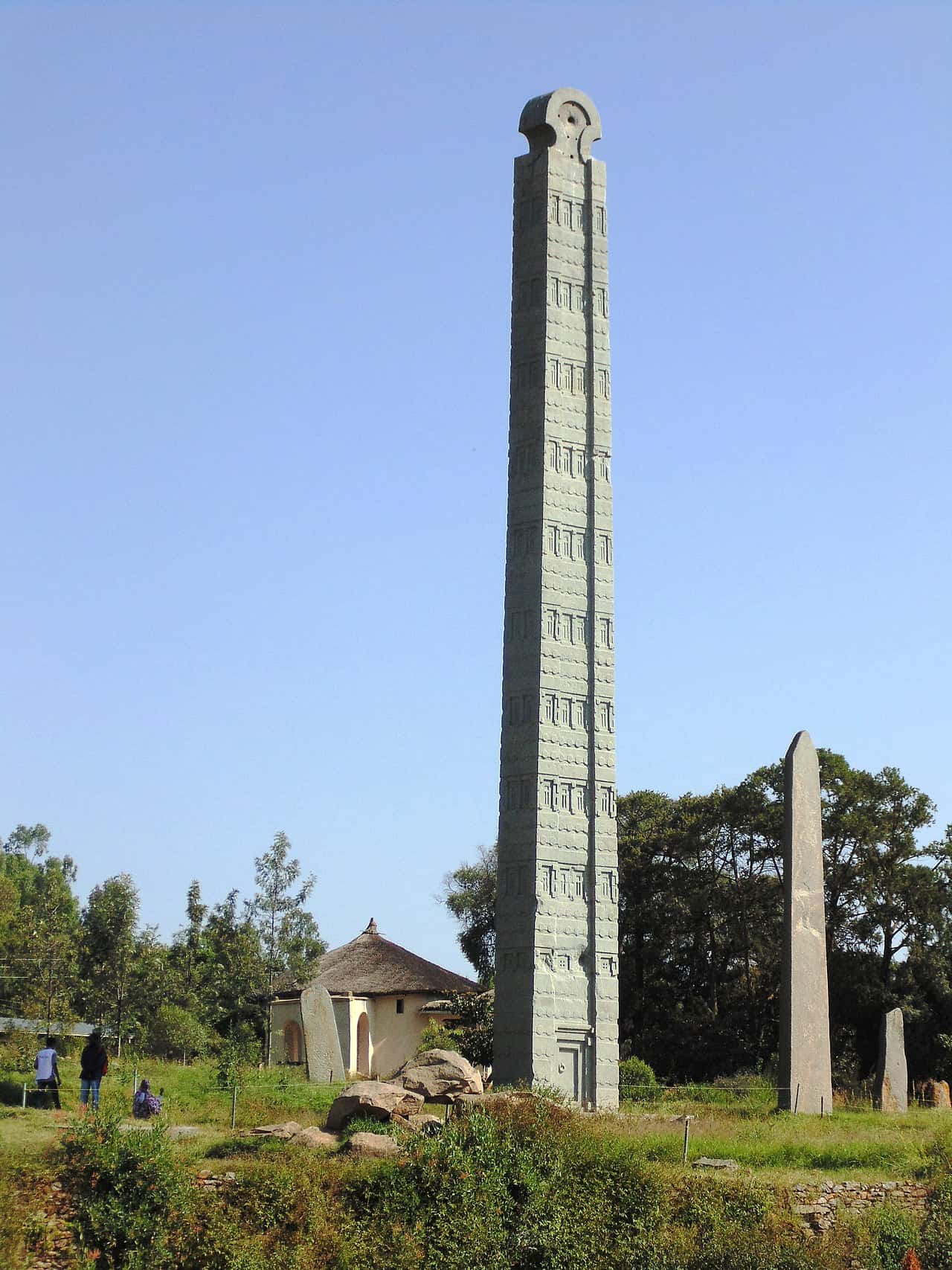
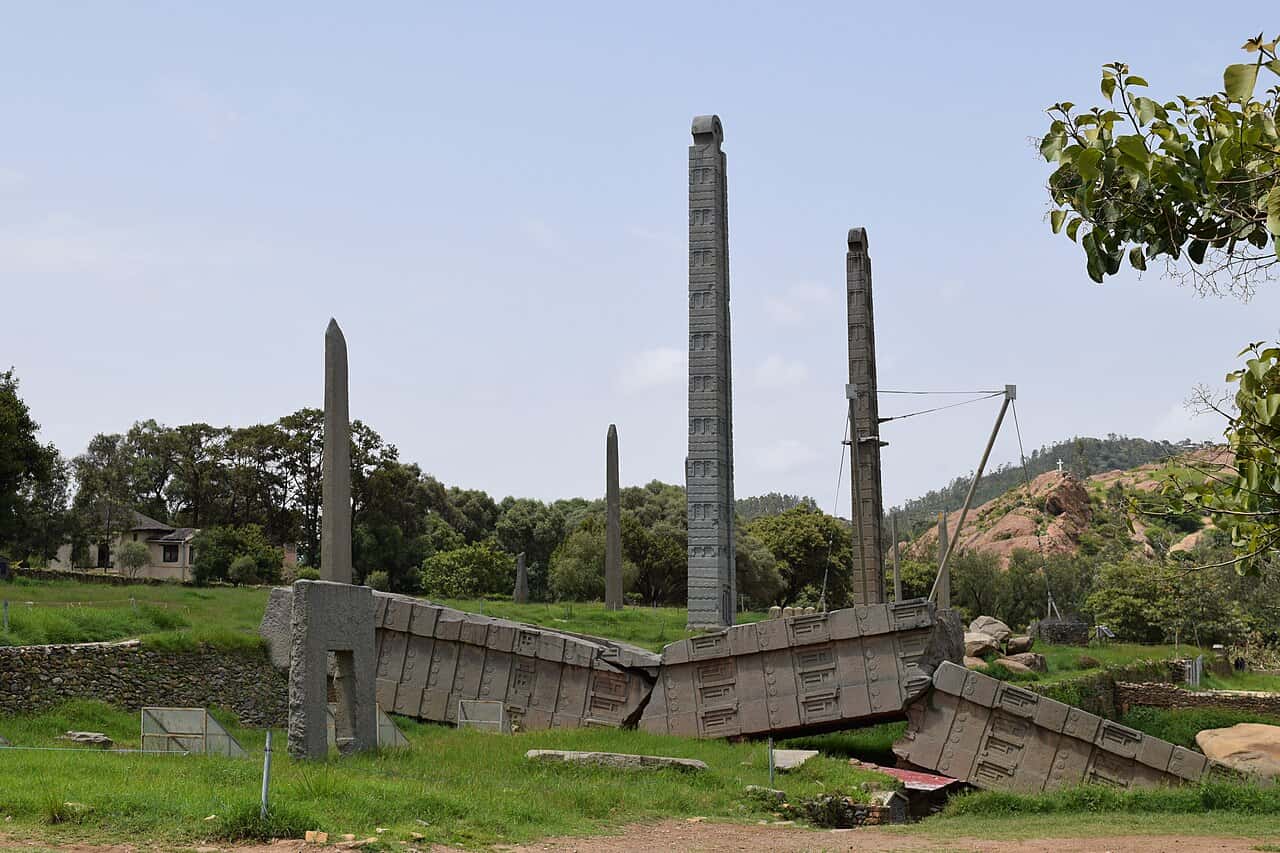
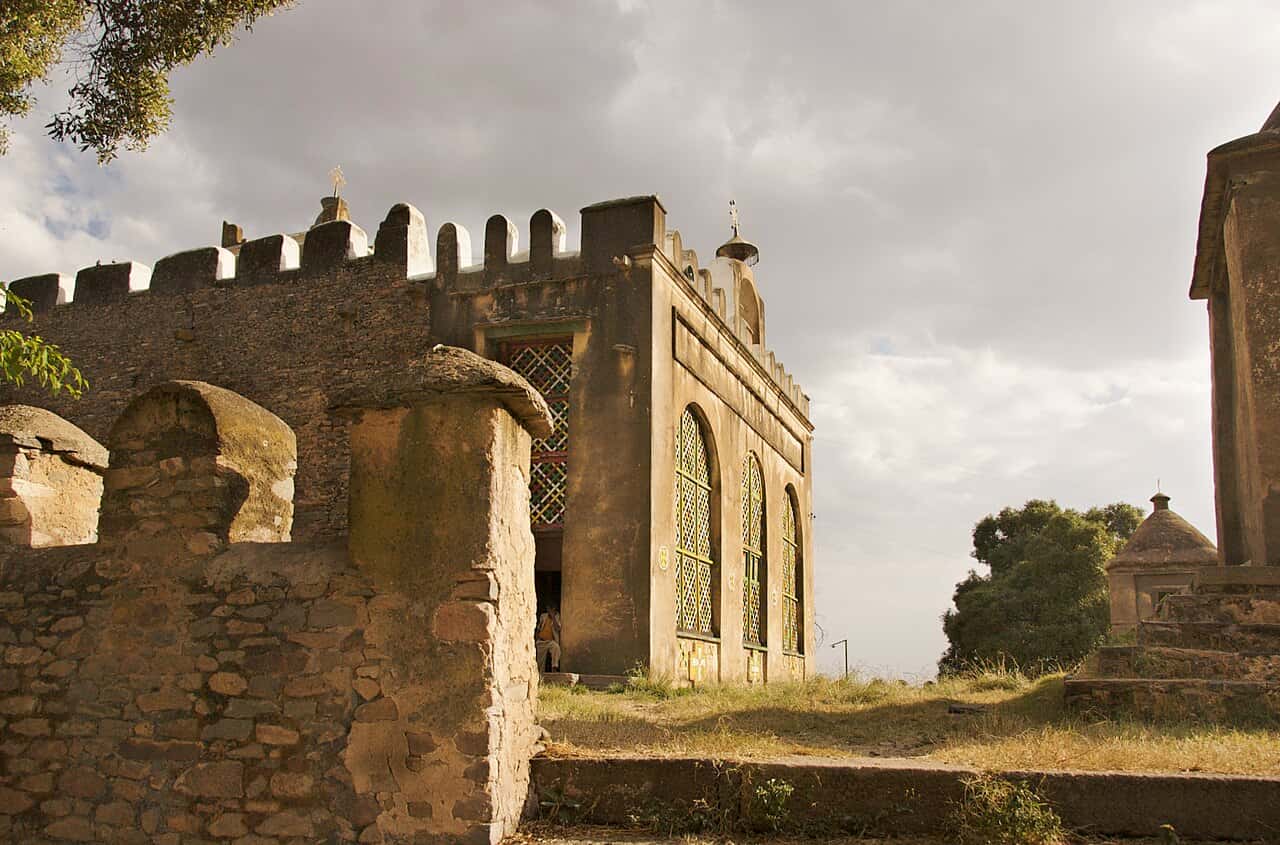
Its giant carved stelae, the ruins of an ancient African kingdom, and the Church of St Mary of Zion, one of the most sacred sites of Ethiopian Orthodox Christianity.
Ethiopian Orthodox tradition says it is kept in the Chapel of the Tablet beside St Mary of Zion. Only a single guardian monk may enter, so no visitor can see it.
The great carved stelae date from around the 3rd and 4th centuries AD, roughly 1,700 years ago.
 What to expect
Ethiopian Airlines runs Ethiopia's scheduled domestic flights, from Terminal 1 at Addis Ababa Bole airport to about two dozen towns, including Dire Dawa, Hawassa and Arba Minch. Arrive at least an hour before a domestic departure, and keep economy cabin bags to 7 kg. As of late September 2026, flights to Mekelle, Axum, Shire and Lalibela in the north are suspended.
Updated Sept 2026 · 7 min
 What to expect
Holy Trinity Cathedral (Kidist Selassie), near Arat Kilo in Addis Ababa, is where Emperor Haile Selassie and Empress Menen lie in granite tombs, and Sylvia Pankhurst and Meles Zenawi are among those buried in the grounds. It is widely ranked as Ethiopia's second most important place of worship, after St Mary of Zion in Aksum. Foreign visitors pay an entry fee at the office by the gate (check the amount there), dress modestly, remove their shoes inside and should allow one to two hours.
Updated Sept 2026 · 6 min
Going to Aksum? Tell us where.
One fixed price for the whole car, by email. A real person, usually within the hour.One fixed quote for the whole car, in minutes. A real person, on WhatsApp.