The Danakil Depression in Afar: what it is, and what current travel advice says about going there.
1 answer
The Danakil Depression is a basin about 200 km long in the north of Ethiopia's Afar Region, lying around 125 m below sea level at its deepest point. It formed as the Earth's crust is slowly pulled apart where tectonic plates meet. In 2022 the International Union of Geological Sciences recognised it as a key geological site showing 'the ongoing birth of an ocean'.
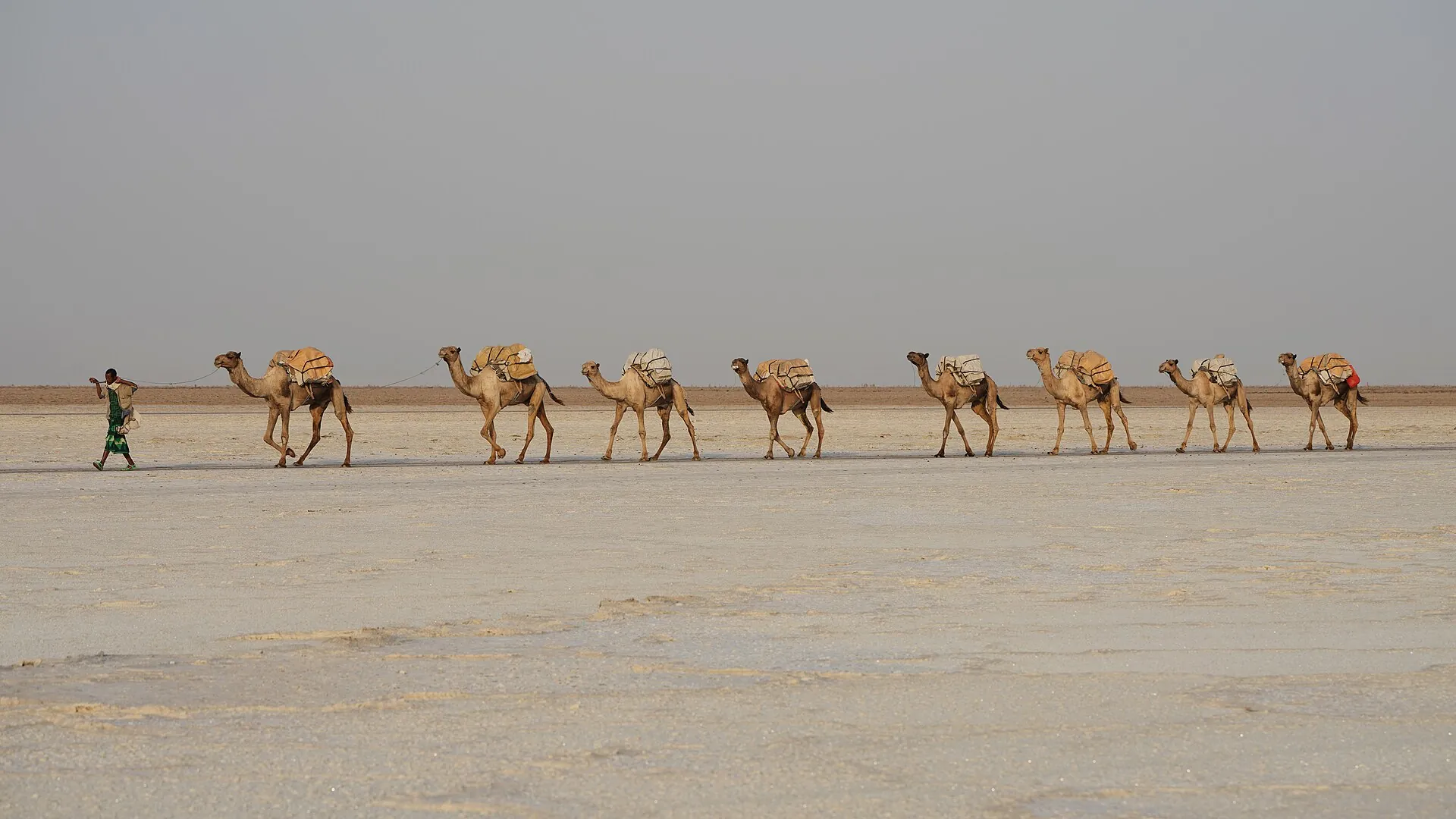
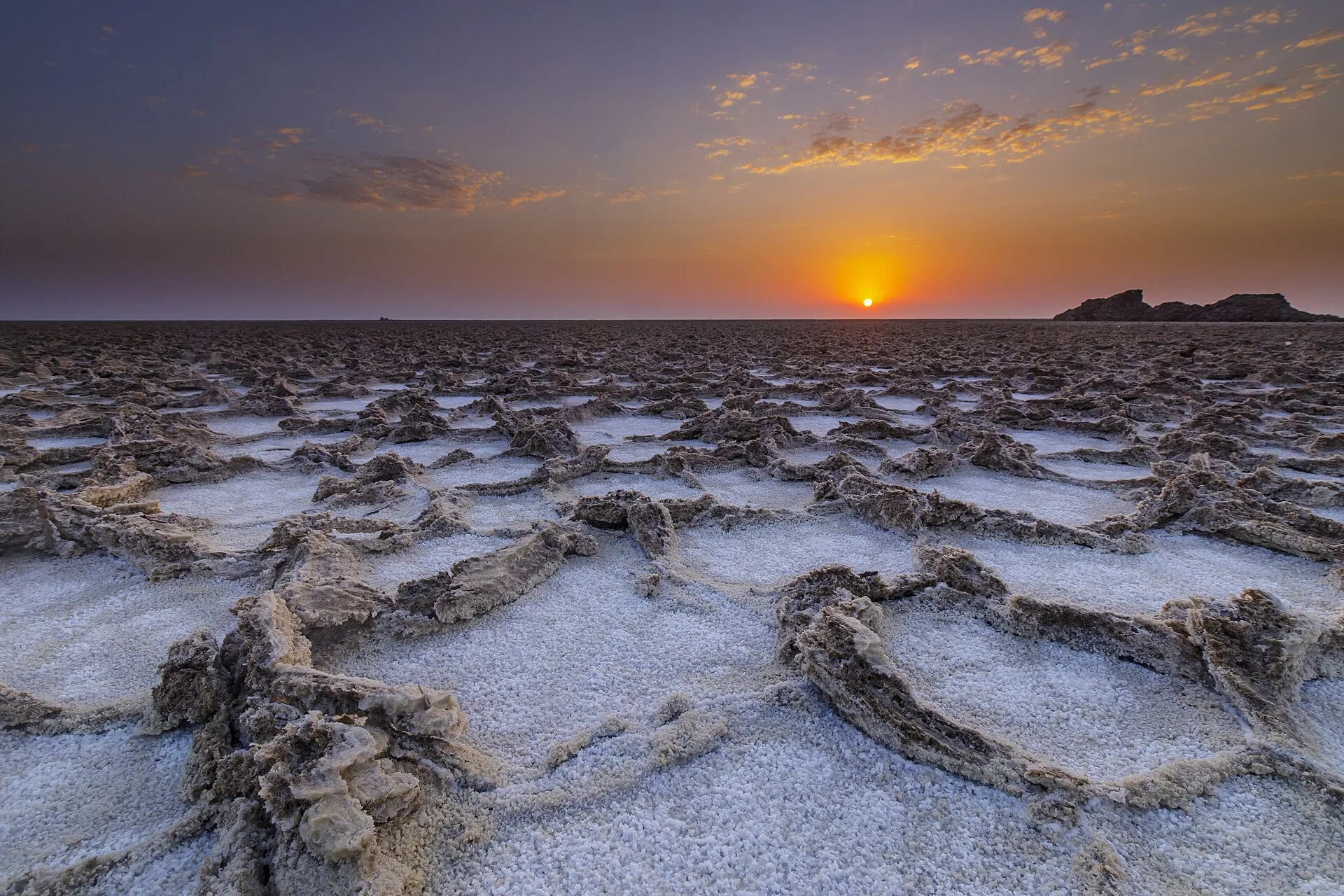
For centuries the Afar people have cut salt from the flats of Lake Assale (Karum) by hand and carried it by camel caravan into the highlands. Bars of this salt, called amole, served as one of Ethiopia's main forms of money, and they were still in use as late as 1911. The same work goes on today, and visitors can watch salt being cut, shaped and loaded much as it was in the past.
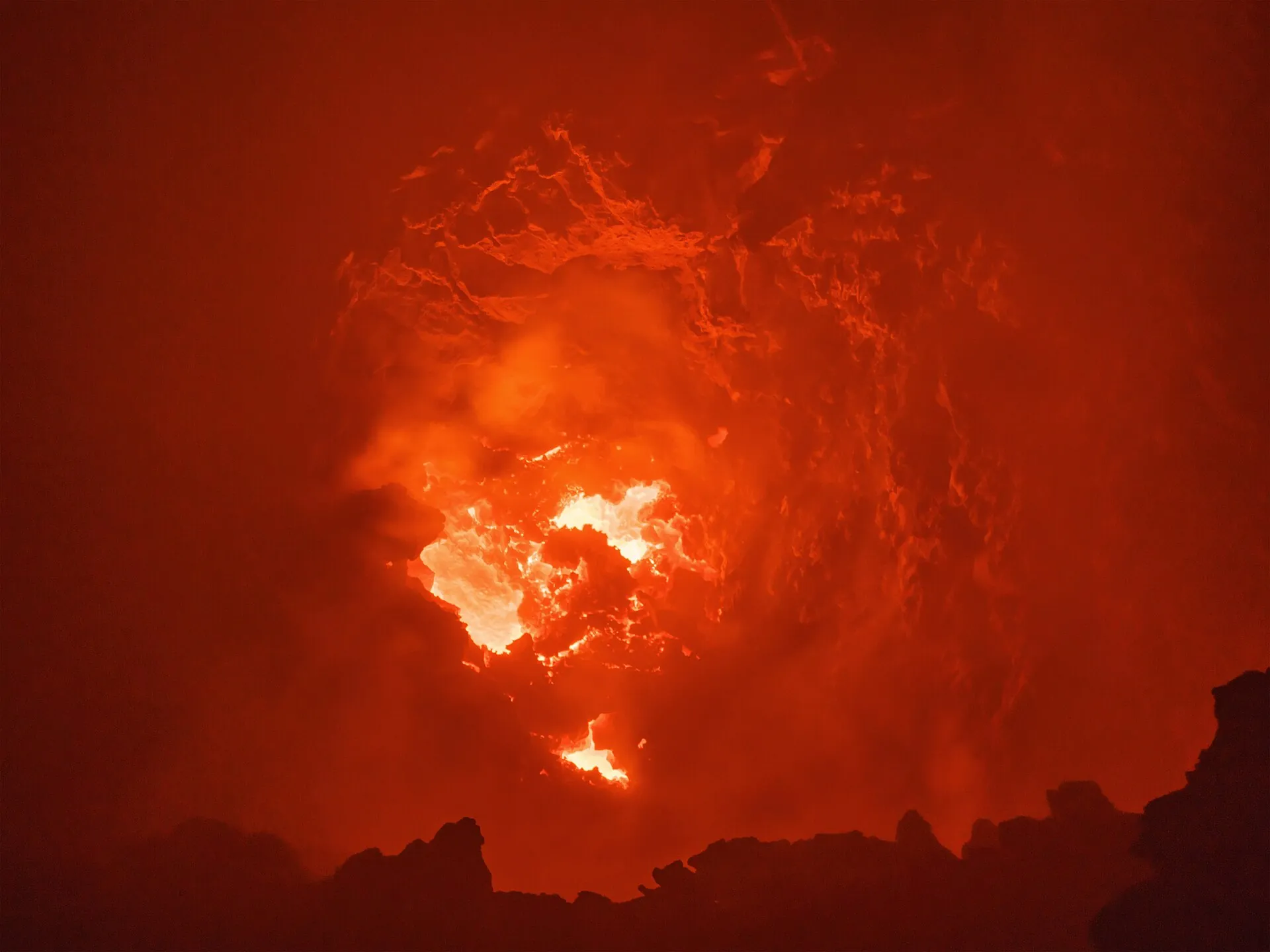
The landscape is still changing. At Dallol, small explosive steam-driven eruptions in 1926 created a crater in a dome of salt, and hot springs there still build up mineral terraces in yellow, ochre and brown. To the south, the shield volcano Erta Ale ('smoking mountain' in the Afar language) has had a lava lake since at least 1906, one of the longest-lived in the world.
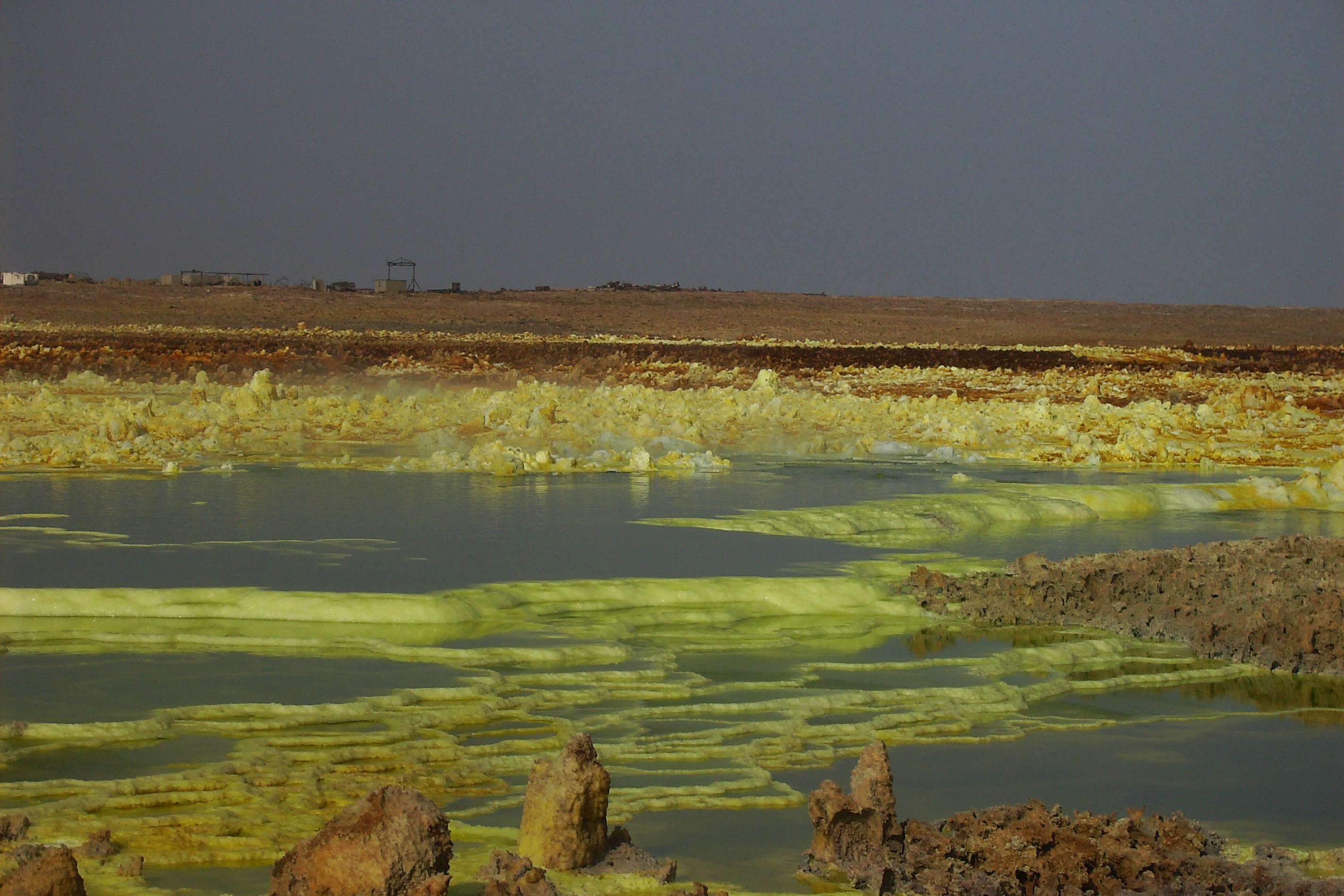
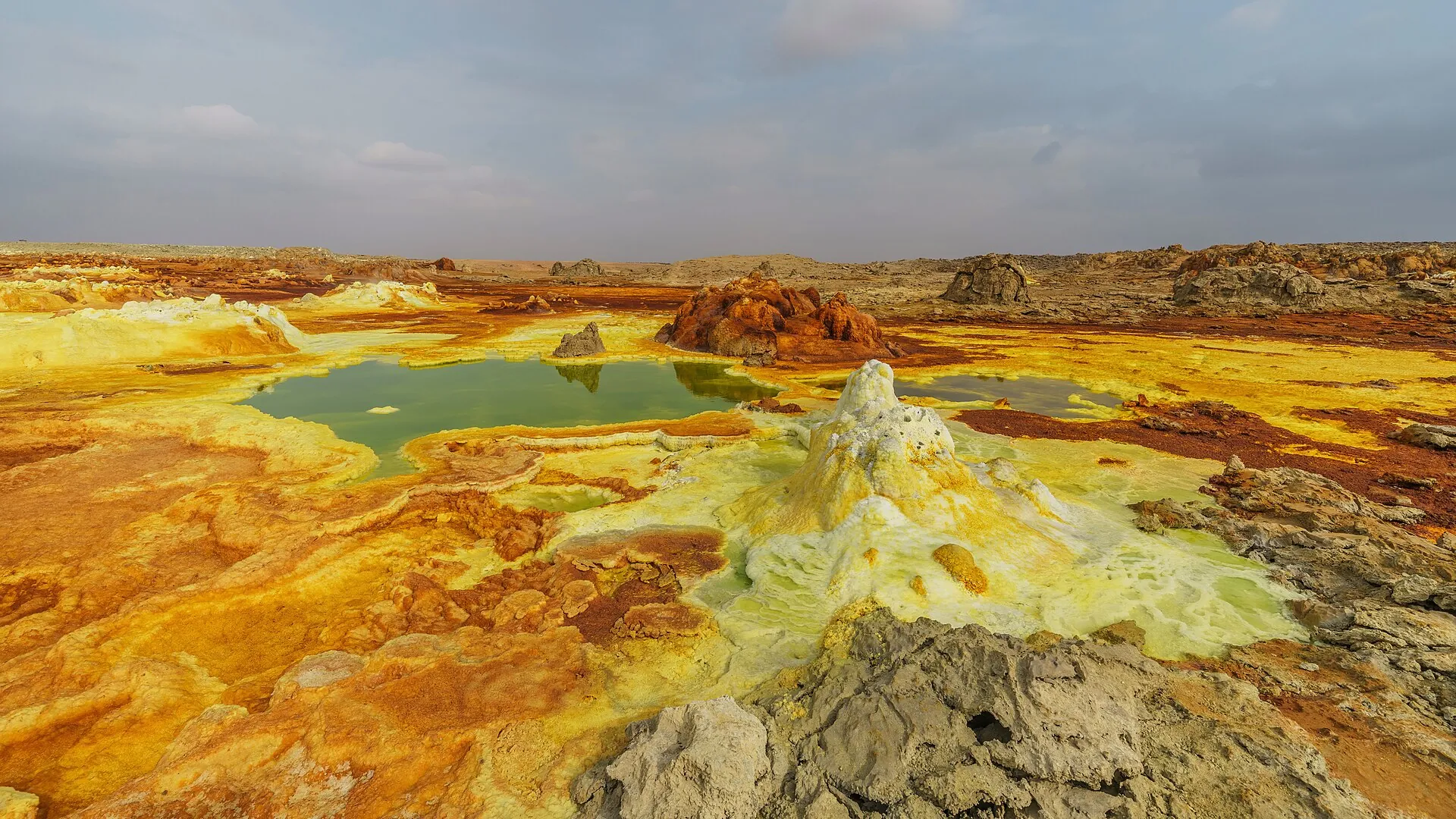
Acidic hot springs, salt chimneys and crusts in vivid yellow, green and rust-brown, coloured by iron and other minerals rather than by living things.
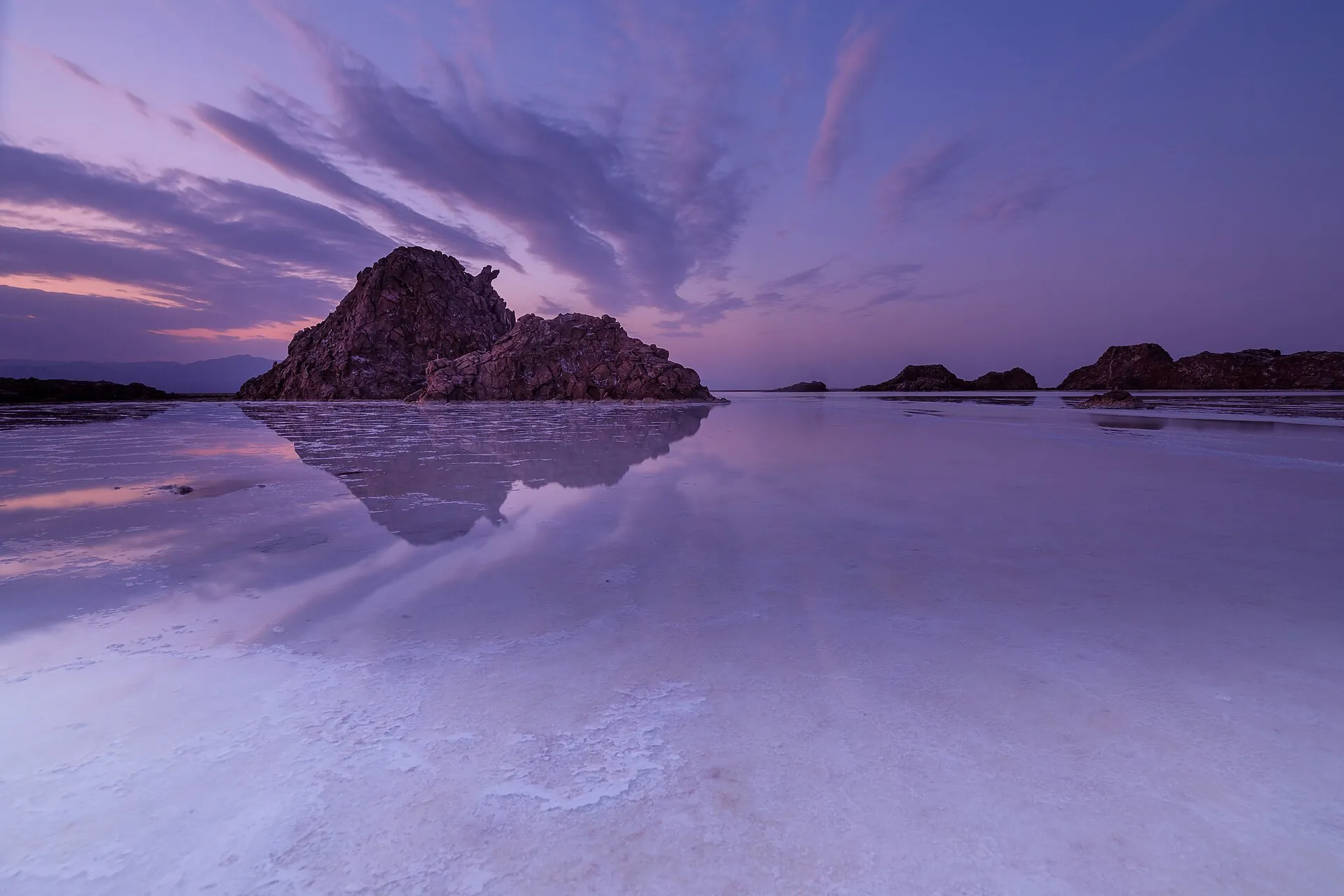
A flat white salt plain about 120 m below sea level, where workers cut salt blocks by hand and camel caravans carry them away.
Long lines of camels and donkeys loaded with salt blocks cross the plain towards the highlands, continuing a trade that is centuries old.
A low, broad volcano whose summit crater has long held a glowing lava lake. Its activity changes from year to year.
The Danakil's largest salt lake, around 100 km² and about 102 m below sea level, where salt is also gathered.
Hot, salty and very acidic springs at Dallol carry iron, sulphur and other minerals that dry into yellow, green, orange and brown crusts and terraces.
Its lowest parts lie around 125 m below sea level, which makes it one of the lowest places in Africa.
It has one of the highest year-round average temperatures on Earth. Even in the cooler months, roughly November to February, days reach about 30 °C in the shade.
Going to Danakil Depression? Tell us where.
One fixed price for the whole car, from a real person.One fixed quote for the whole car, from a real person, on WhatsApp.