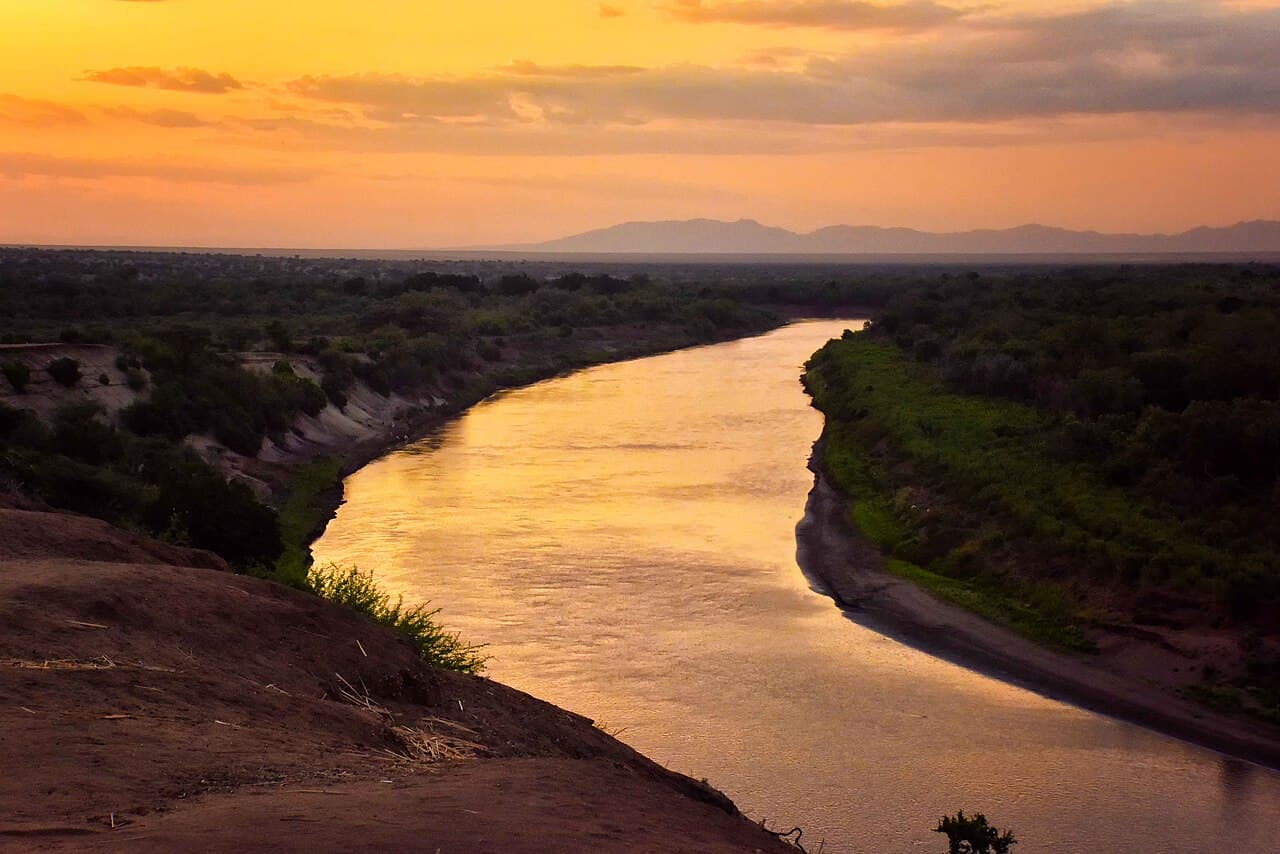
A river valley in Ethiopia's far south-west, known for fossils that trace early human history and for the many communities who live along the Lower Omo.
The Lower Omo holds one of the oldest chapters of the human story. Fossil beds along the river have yielded hundreds of hominin remains, and stone tools found here are thought to be around 2.4 million years old. In 1967 a team led by Richard Leakey found the skulls known as Omo I and II in the Kibish Formation; a 2022 study dated them to at least 233,000 years. UNESCO listed the Lower Valley of the Omo as a World Heritage Site in 1980.
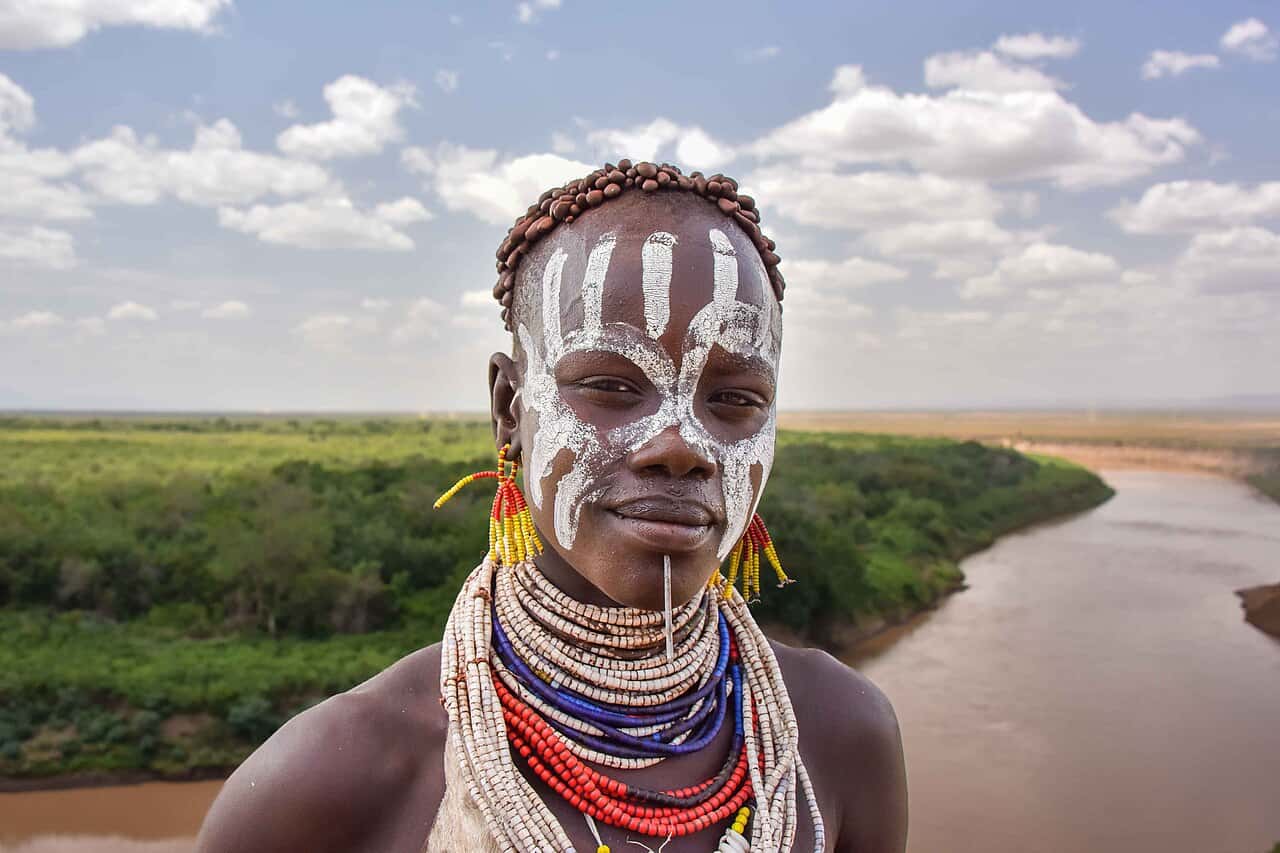
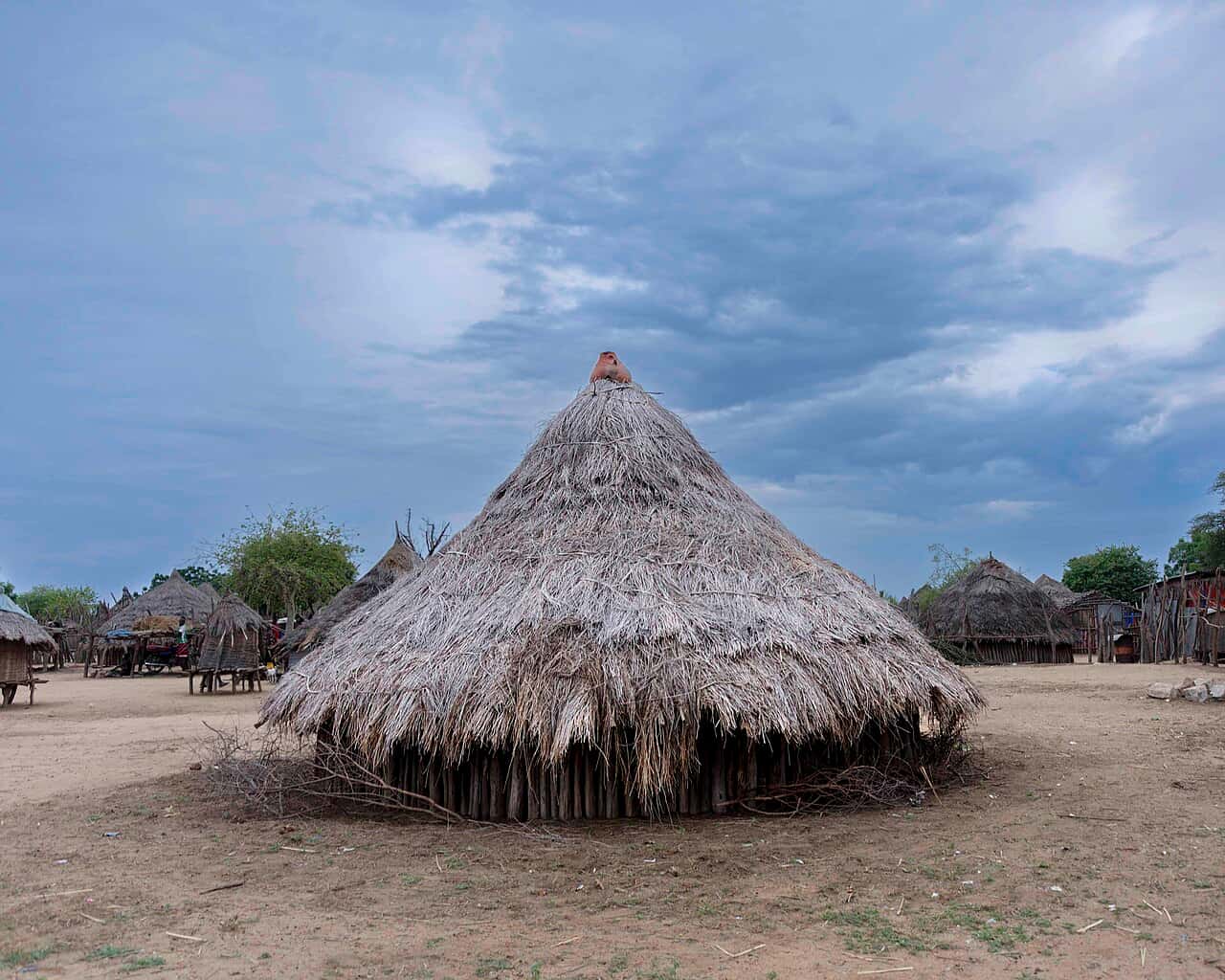
The valley is also home to many living communities, each with its own language, dress and customs. The Hamer keep cattle and goats and grow sorghum, and their bull-jumping ceremony marks a young man's passage to adulthood. The Karo live close to the river and are known for detailed body painting. The Mursi farm and herd between the Omo and Mago rivers, while the Dassanech grow crops on the Omo delta after the river floods.
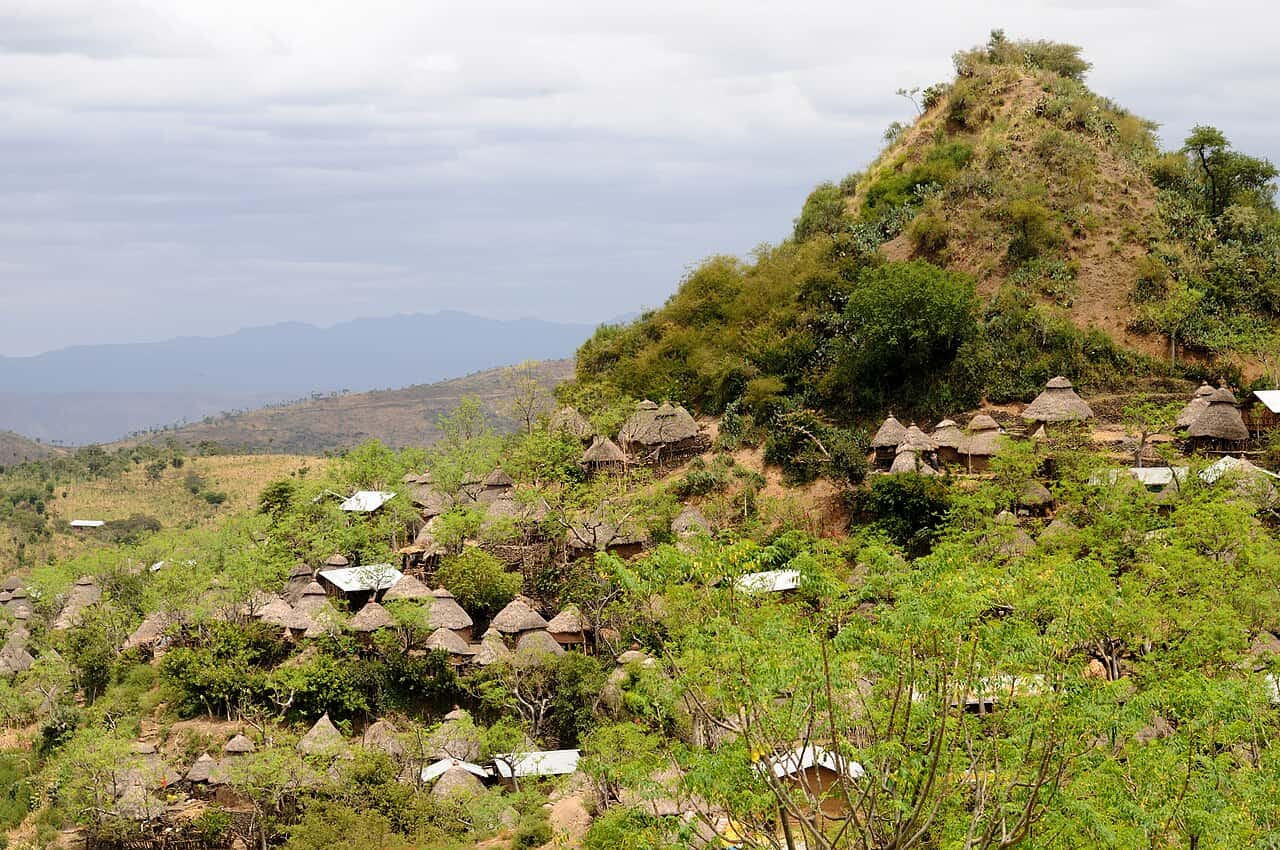
On the eastern edge of the region, the Konso people have shaped their hills with dry-stone terraces that hold soil and water, some walls standing up to 5 metres high. Their walled towns, carved wooden grave markers called waka and stones raised to mark the handover between generations led UNESCO to list the Konso Cultural Landscape in 2011.
A market town in the green hills at about 1,490 m, home to the South Omo Museum and Research Center, a good introduction to the region's peoples. Mago National Park lies about 40 km to the south.
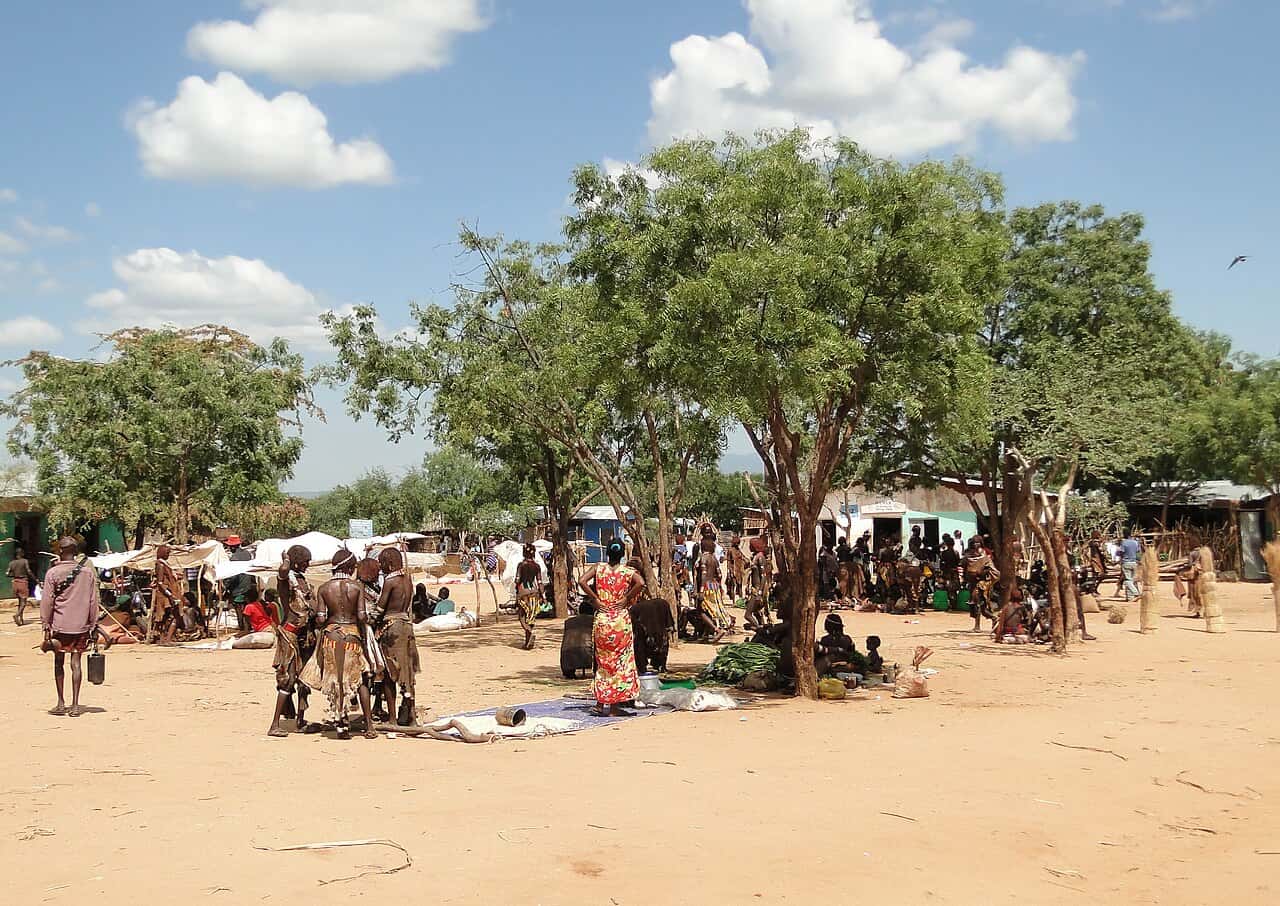
Turmi is the main base in Hamer country, with a busy market where families trade goats, grain and crafts. The surrounding area is where Hamer bull-jumping ceremonies take place.
Small Karo villages such as Korcho sit above a wide bend of the Omo River, with long views over the water and the savannah beyond.
The hills between the Omo and Mago rivers are home to the Mursi, cattle-keepers and farmers whose women are known for clay lip plates worn at dances and ceremonies.
In the far south the Omo nears Lake Turkana. Around Omorate the Dassanech farm sorghum and maize on the riverbanks after the floods and herd goats and cattle.
Terraced hillsides, walled stone towns and carved waka grave markers make Konso a rewarding stop on the way to or from the lower valley.
Jinka and Turmi are the usual bases, with Konso and Arba Minch often used as stops on the way south. Jinka also has an airstrip.
Its fossil beds have produced hominin remains and stone tools that are central to the study of human evolution, including the Omo I and II skulls.
Its dry-stone farming terraces, fortified hilltop towns and the tradition of carving wooden waka statues and raising generation stones, all listed by UNESCO in 2011.
Going to Omo Valley? Tell us where.
One fixed price for the whole car, by email. A real person, usually within the hour.One fixed quote for the whole car, in minutes. A real person, on WhatsApp.