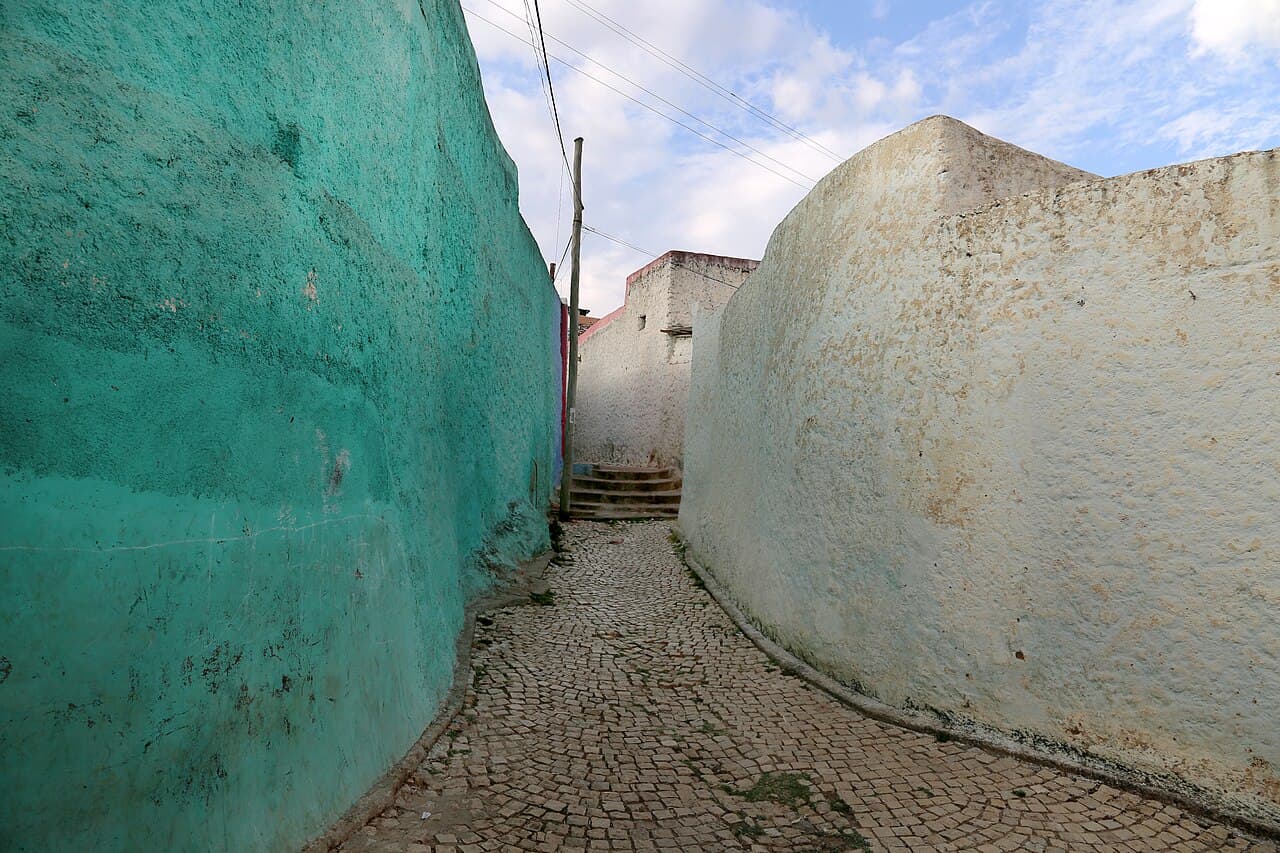
A walled city in eastern Ethiopia with narrow lanes, painted houses, 82 mosques and 102 shrines, listed by UNESCO and known for its coffee and hyena feeding.
1 answer
Harar's beginnings are uncertain. Some accounts place its founding in the 7th or 10th century, while local tradition tells of the saint Abadir arriving with followers around 1216. Its walls, called the Jugol, were built between the 13th and 16th centuries, and much of the work is credited to Emir Nur in the 16th century. From 1520 to 1568 Harar was the capital of the Adal Sultanate.
From the late 16th to the 19th century Harar was a well-known centre of trade and Islamic learning, and from the 17th century it was an independent emirate. The British explorer Richard Burton reached it in 1855 and called it 'the emporium of the coffee trade'. Egypt ruled the city from 1875 to 1885, and in 1887 Menelik II brought it into Ethiopia.
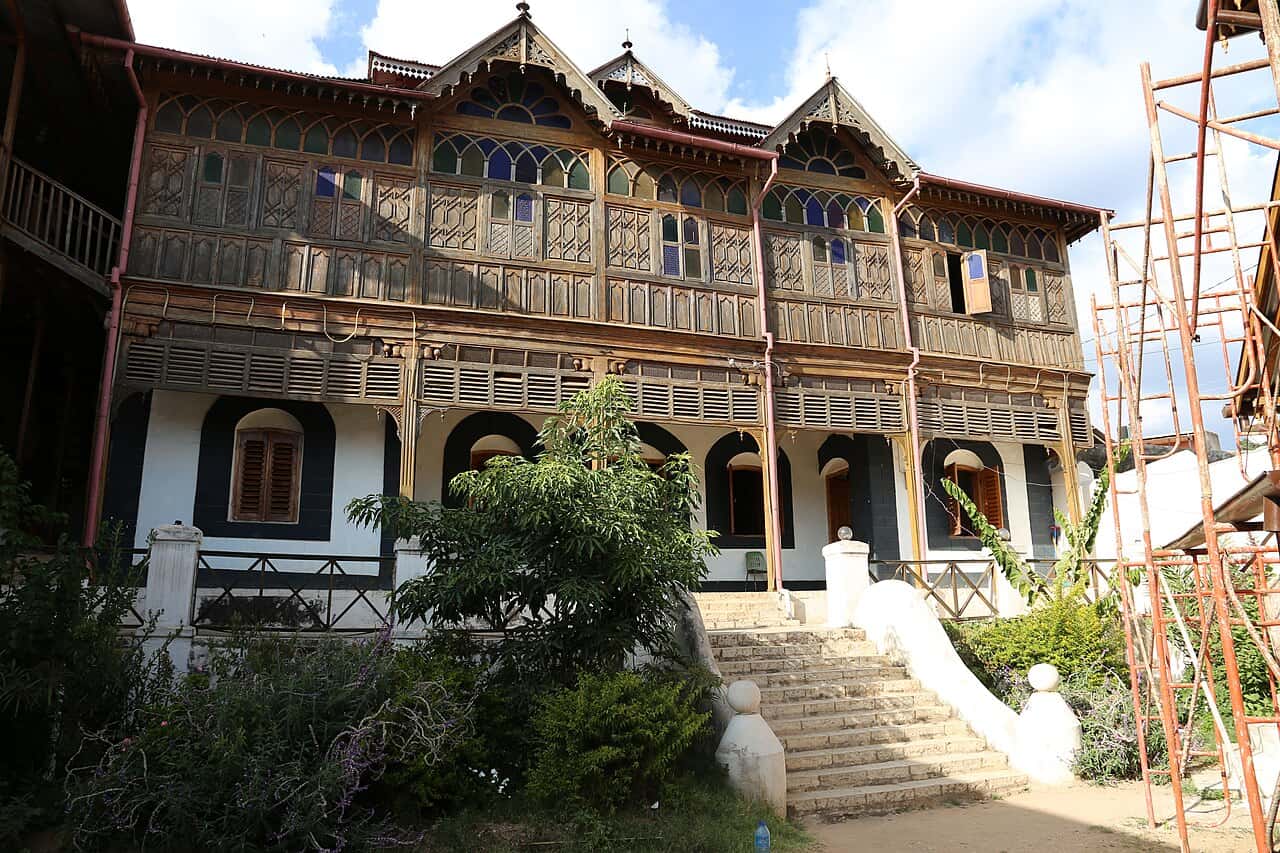
The French poet Arthur Rimbaud lived and traded in Harar on and off between 1880 and 1891, dealing in coffee, hides and musk. After 1887 Indian merchants built two-storey houses with wooden balconies, adding a new style to the town. Ras Makonnen governed Harar, and his son, the future Emperor Haile Selassie, spent his childhood here. UNESCO listed the old town in 2006.
Inside the walls, narrow alleys weave between whitewashed and brightly painted houses, small mosques and shrines. Walking is the best way to see them.
Historic gates such as Asmadin, Argobba, Suqutat and Badro lead into the old town. The large Harar Gate on the western side is the busy main entrance.
Traditional homes have raised carpeted platforms and walls hung with colourful baskets and enamel plates. UNESCO calls this interior design the most spectacular part of Harar's heritage.
After dark, just outside the walls, local 'hyena men' call wild spotted hyenas by name and feed them meat. The custom developed into an evening show for visitors in the 1960s.
A merchant's house with a carved wooden front and stained glass, built after Rimbaud's time, now a museum with old photographs of the city and its people.
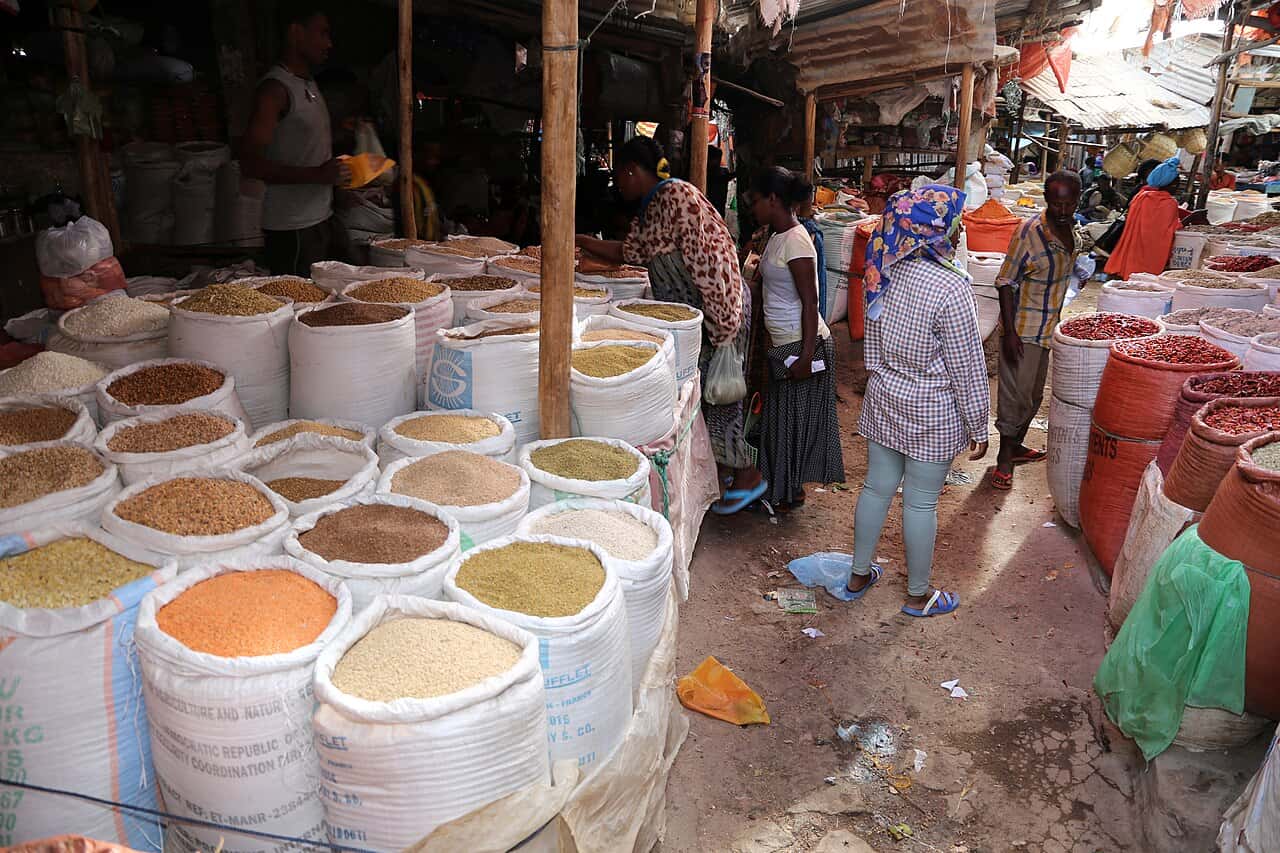
Lively markets sell spices, grain, baskets and cloth, and Harar's coffee is one of Ethiopia's oldest and best-known varieties.
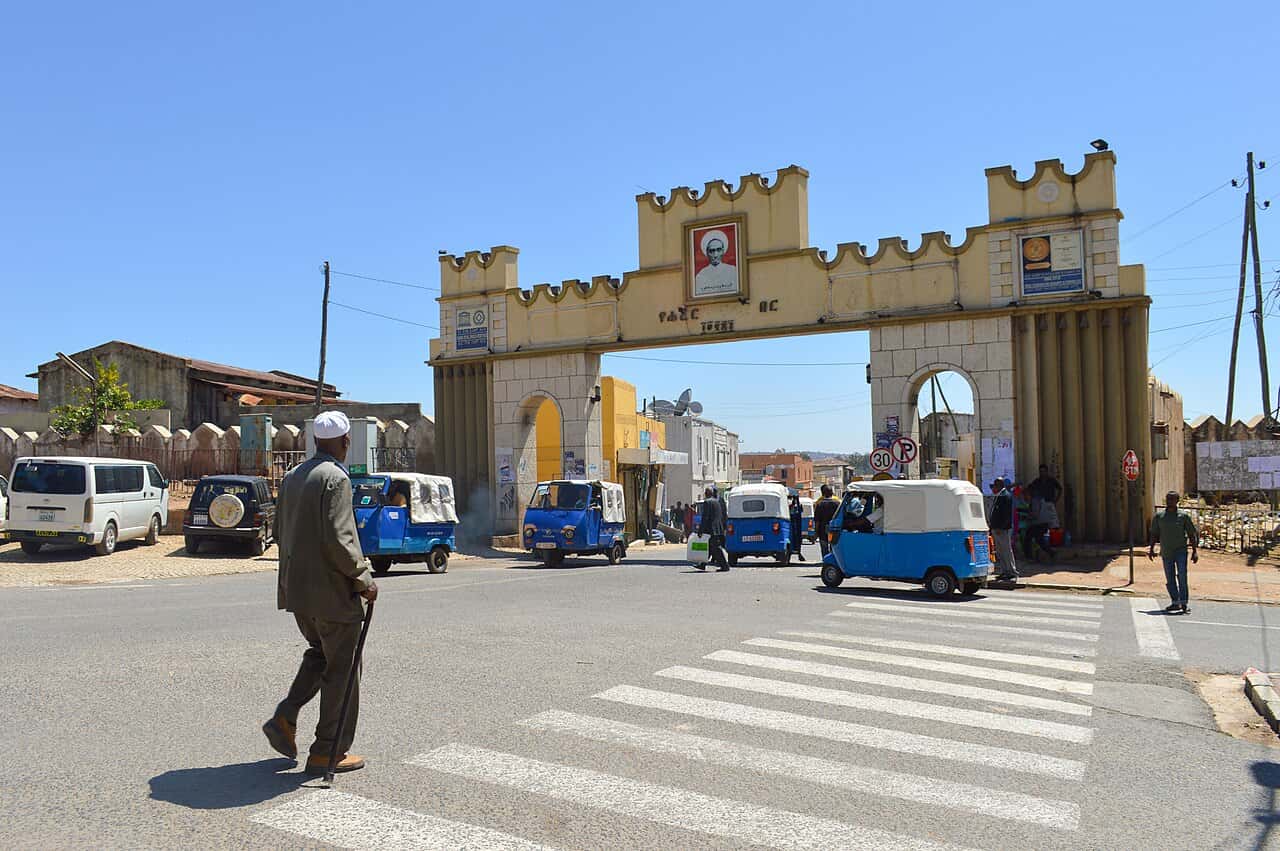
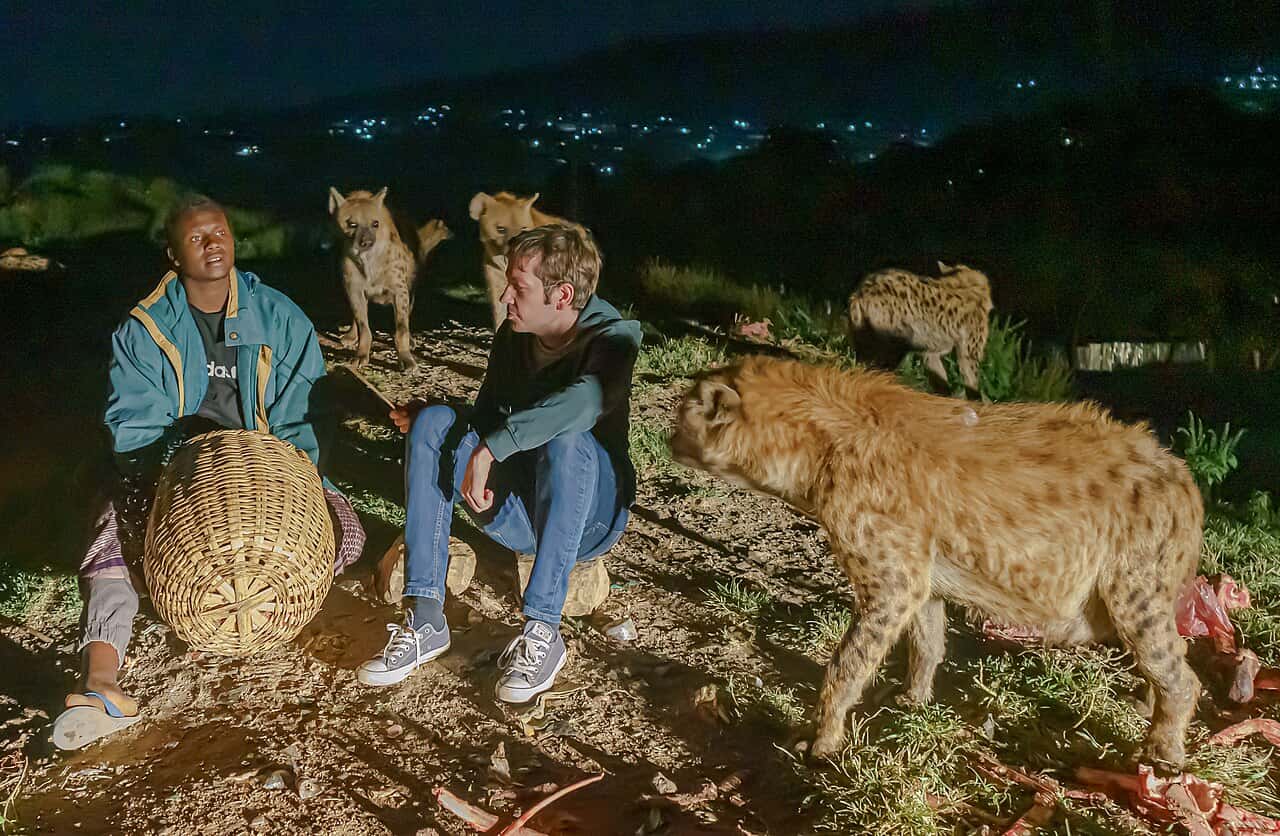
Its walled old town with 82 mosques and 102 shrines, its painted Harari houses, its coffee, and the nightly feeding of wild hyenas.
About 54 km, usually 1 to 1½ hours by road. Dire Dawa has the nearest airport, about an hour's flight from Addis Ababa.
Harar is said to be the fourth holiest city of Islam and has long been a centre of Islamic learning in the Horn of Africa.
Going to Harar? Tell us where.
One fixed price for the whole car, by email. A real person, usually within the hour.One fixed quote for the whole car, in minutes. A real person, on WhatsApp.
