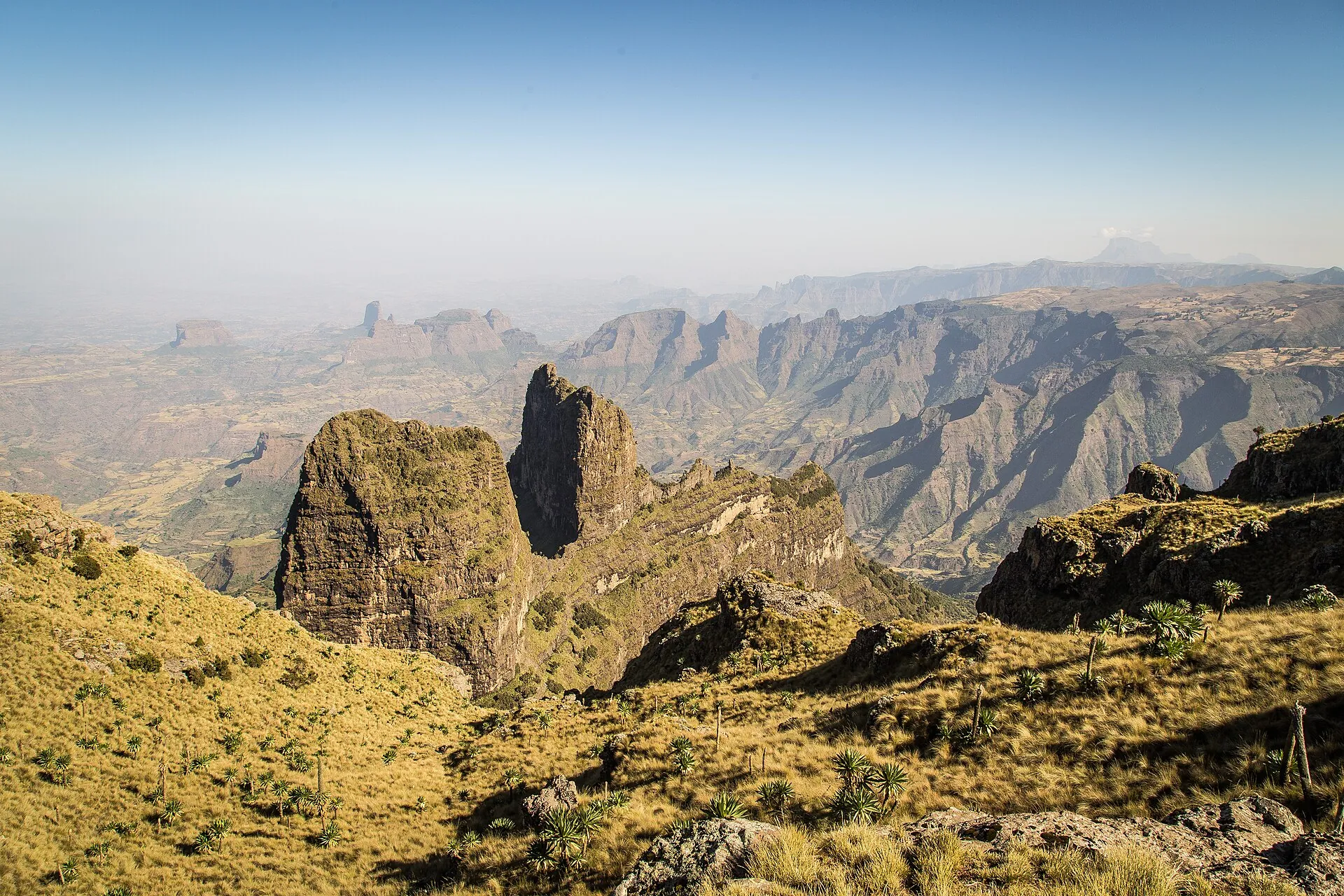
A national park of high plateaus, deep gorges and sheer cliffs in northern Ethiopia, home to gelada monkeys, the rare walia ibex and the country's highest peak.
4 answers
The Simien Mountains are the worn-down remains of a huge volcanic massif built from lava flows roughly 40 to 25 million years ago. Over millions of years, erosion cut the high plateau into jagged peaks, deep valleys and sheer escarpments, with some cliffs dropping about 1,500 metres. The range includes Ras Dashen (Ras Dejen), at around 4,550 metres the highest point in Ethiopia, and is one of the few places in tropical Africa where snow sometimes falls.
The mountains appear in very old writing. A 3rd-century inscription known as the Monumentum Adulitanum describes snow-covered peaks where soldiers waded knee-deep, and the 6th-century traveller Cosmas Indicopleustes noted that the kings of Aksum used them as a place of exile. The name is linked to the Amharic word for 'north', though the historian Richard Pankhurst suggested its older Ge'ez form meant 'south', as the range lies south of Aksum.
Simien Mountains National Park was established in 1969, and UNESCO inscribed it as one of the first World Heritage Sites in 1978, for its scenery and rare wildlife. People have farmed these highlands for generations, and villages and terraced fields lie within and around the park. Most visitors come to walk, from day hikes along the northern escarpment to multi-day treks between camps such as Sankaber, Geech and Chenek.
A cliff wall running for some 35 km, with huge views over the lowlands from viewpoints such as Imet Gogo (about 3,960 m) and Inatye (about 4,070 m).
Large troops of these grass-eating primates, found only in the Ethiopian highlands, graze the meadows and are often seen at close range.
A wild mountain goat found nowhere else in the world, living on the high cliffs of the park.
With luck you may spot the Ethiopian wolf, the world's rarest canid, while lammergeiers glide along the cliffs among more than 130 bird species.
Around the high camps, tall giant lobelias stand among grassland and tree heather, part of the Afroalpine plant life the park is known for.
Ethiopia's highest mountain, at around 4,550 metres, reached on a longer multi-day trek beyond the main park trails.
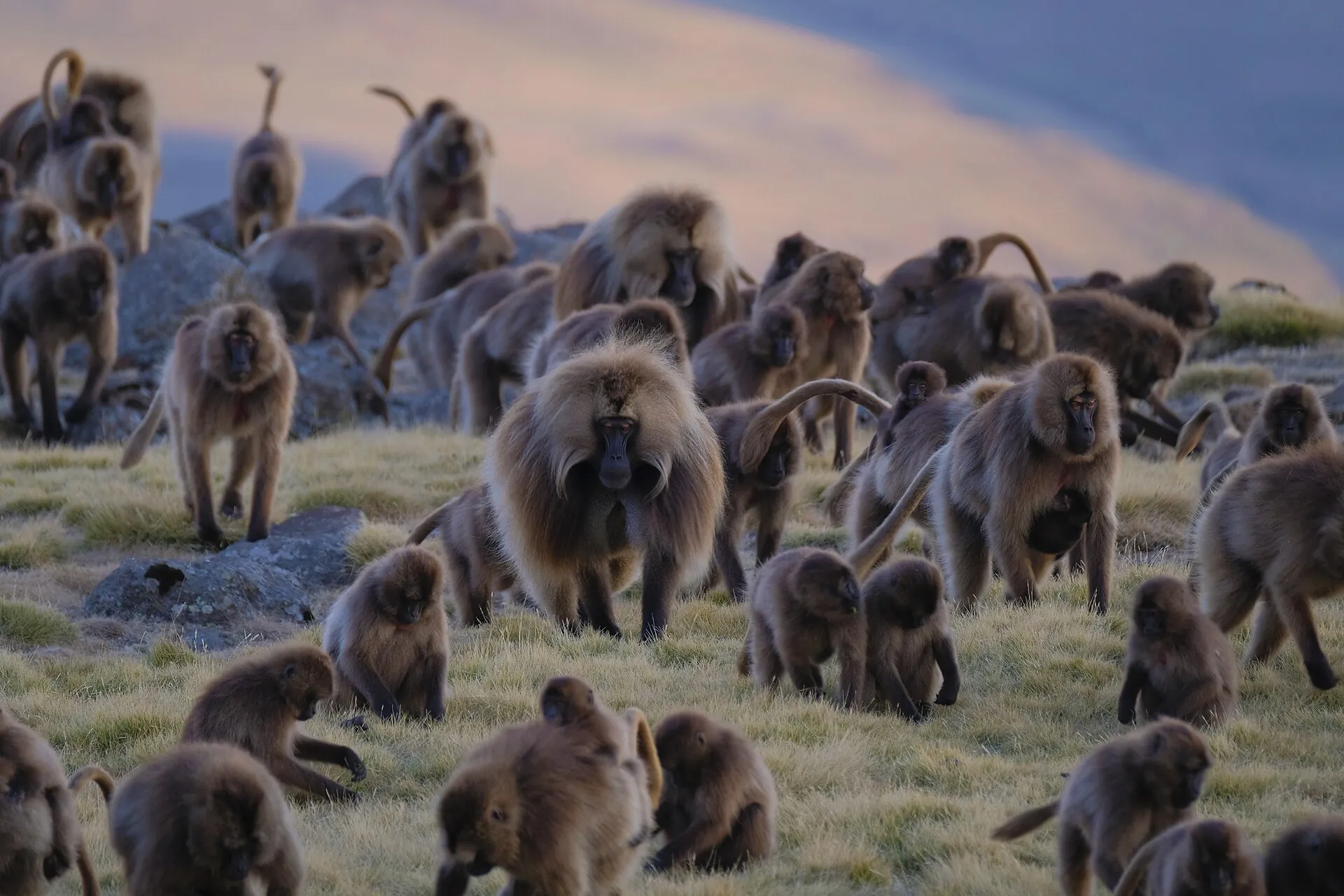
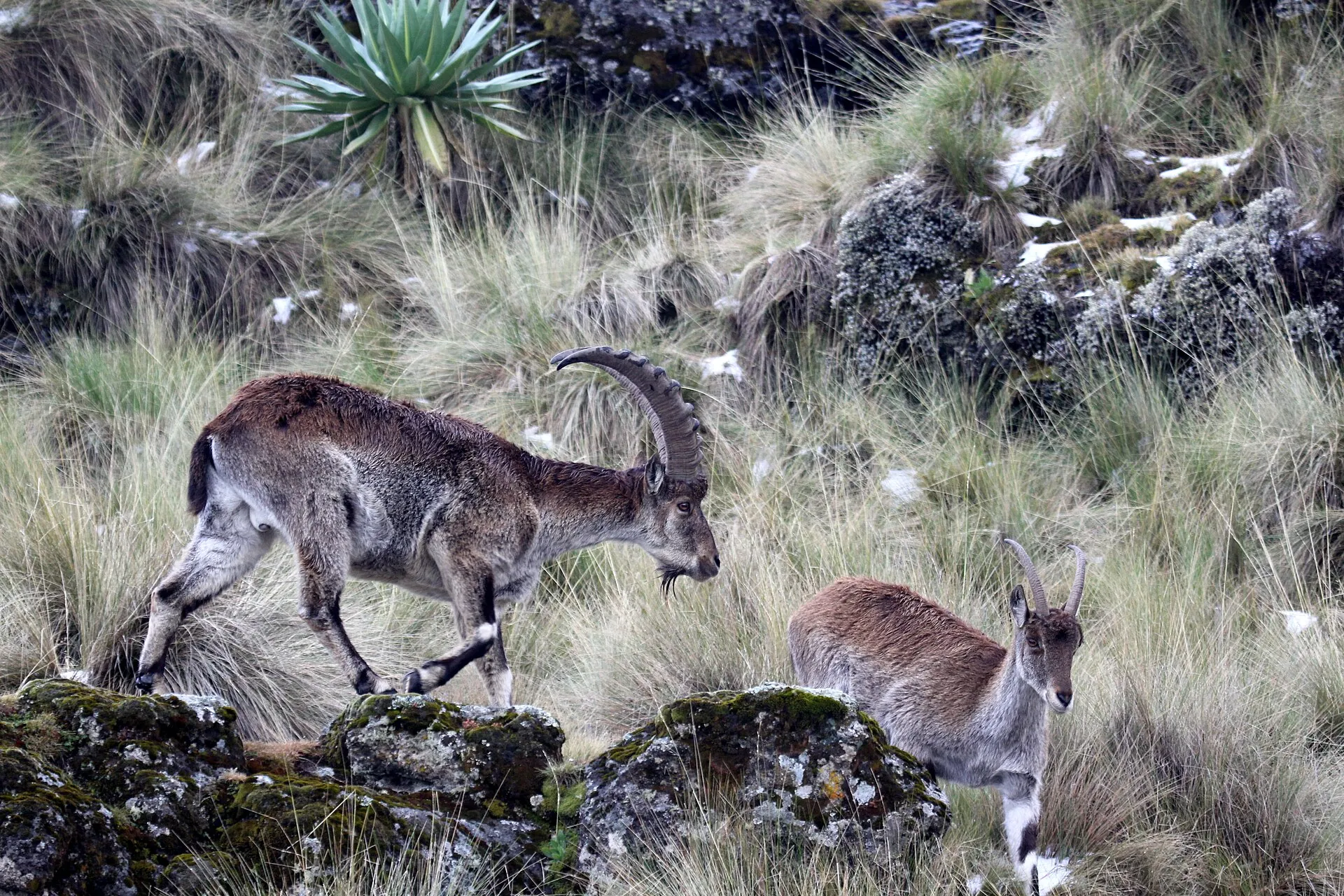
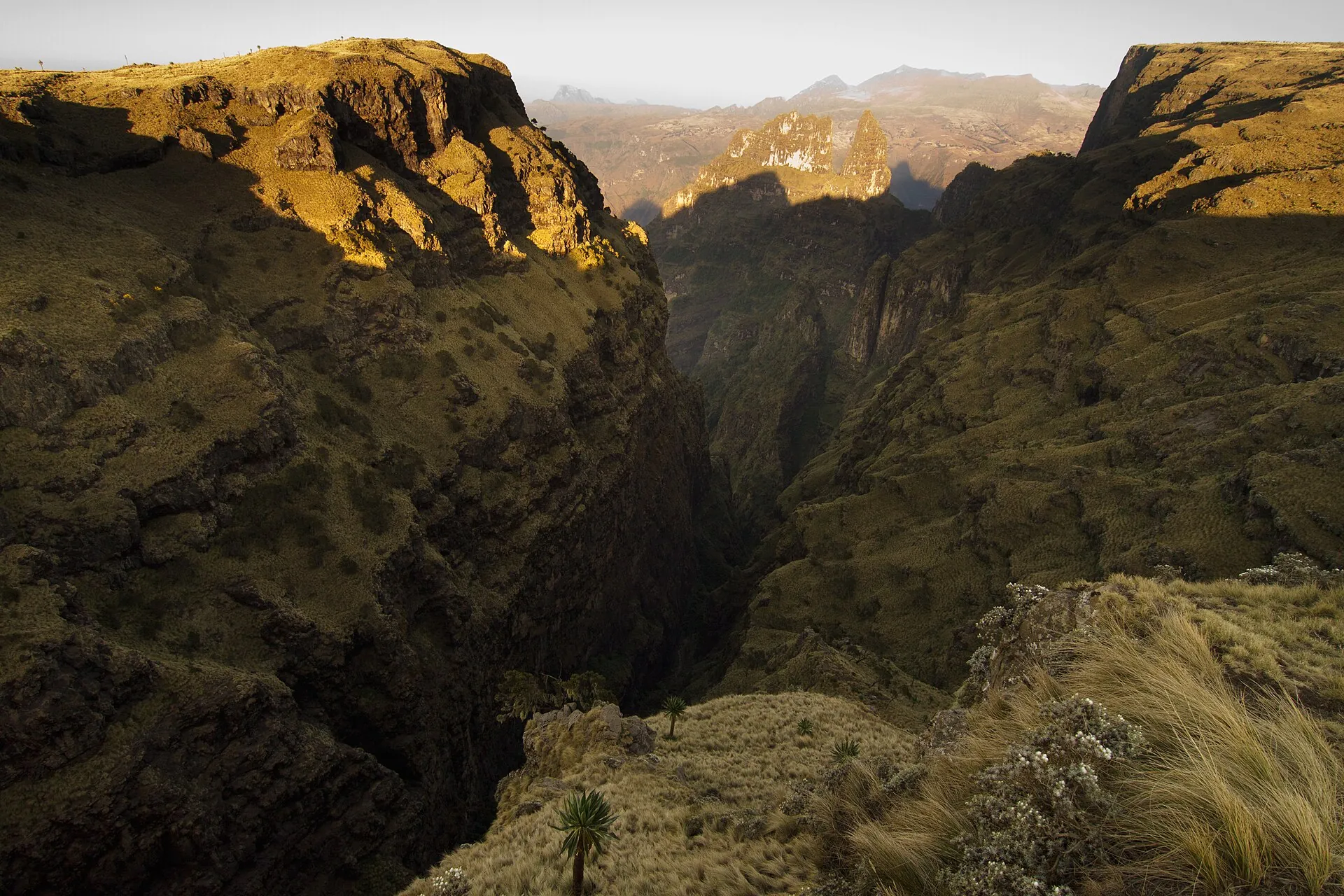
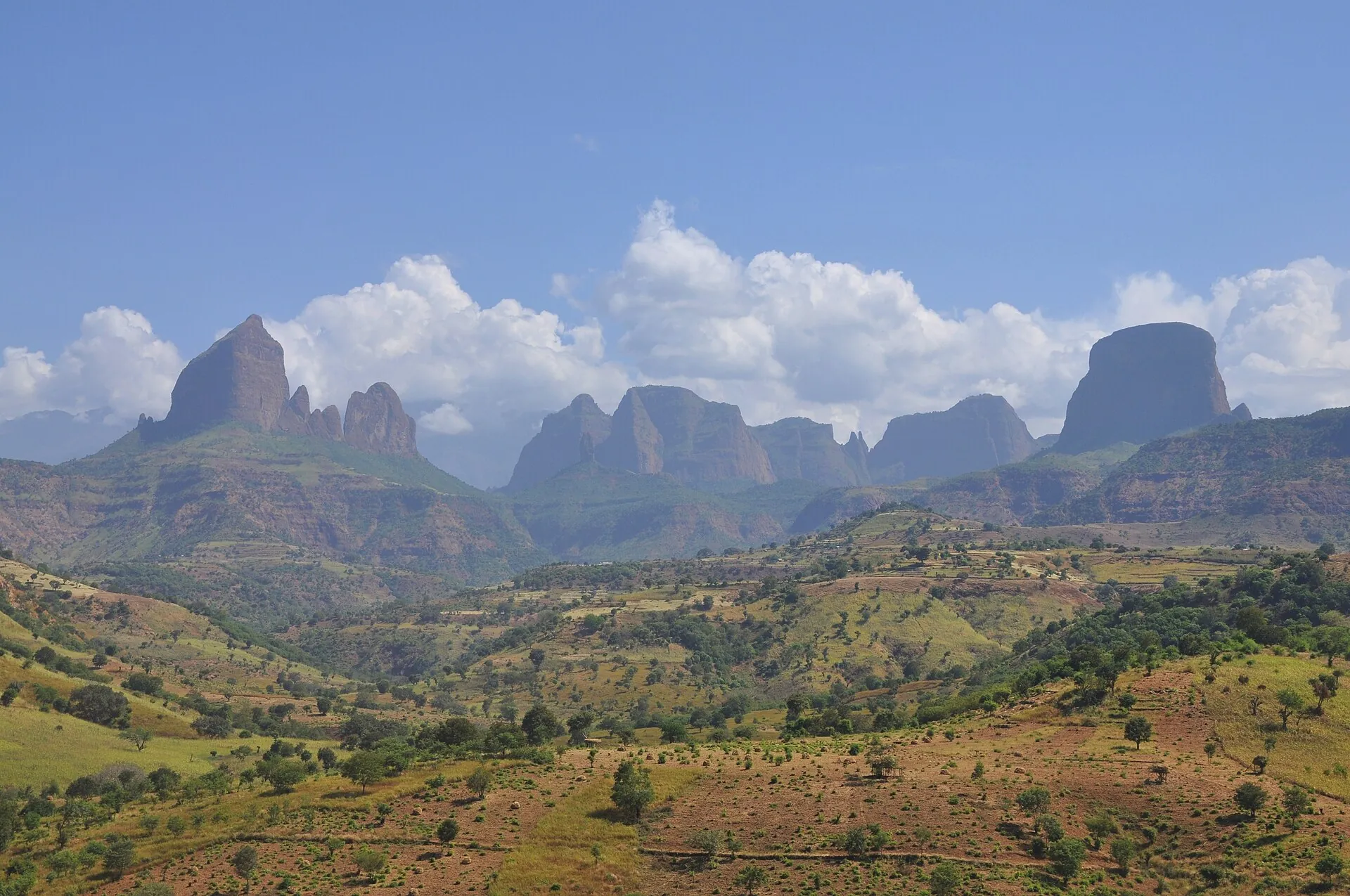
Gelada monkeys are seen on most walks; the walia ibex, found only here, lives on the cliffs, and the rare Ethiopian wolf is sometimes spotted.
The main trekking routes climb to around 4,000 metres, and Ras Dashen, Ethiopia's highest peak, rises to around 4,550 metres.
At Debark, where the park headquarters is, about three hours by road north of Gondar.
 Ethiopia
Yes, but not the Big Five kind you find in Kenya or Tanzania. Ethiopia's wildlife is about animals that live nowhere else, such as the Ethiopian wolf, gelada, mountain nyala and Walia ibex, plus birds and big landscapes. The best park you can visit right now is Bale Mountains National Park, home to the largest population of Ethiopian wolves. Abijatta-Shalla on the road south and Nechisar near Arba Minch also work, while the Simien Mountains and Awash are not advised at the moment.
Updated Nov 2026 · 7 min
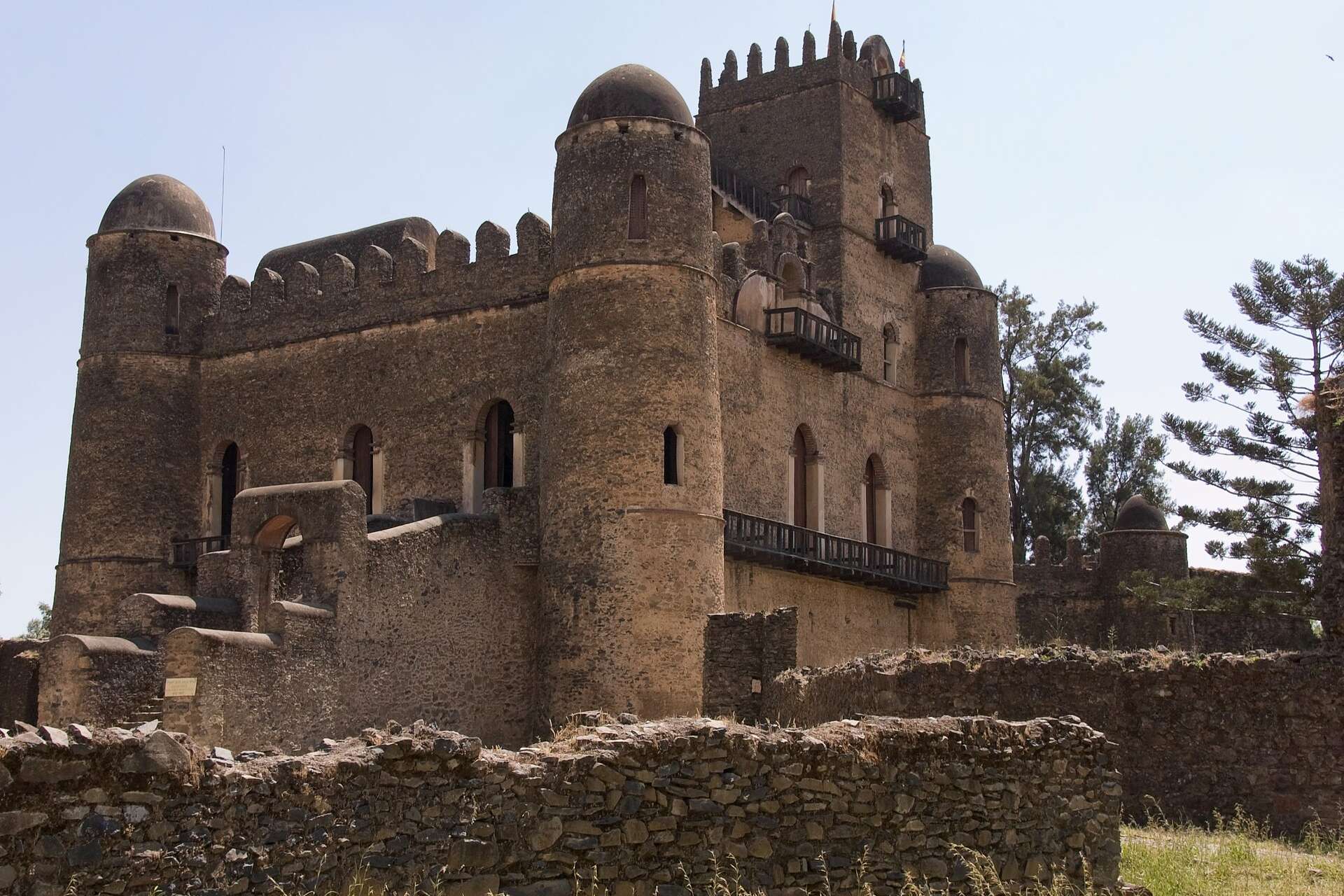 Is it safe
Not right now. Bahir Dar, Gondar and the Simien Mountains are in Amhara region, where official travel advice warns against all travel after fighting in the north escalated in late September 2026; as of 10 October that advice hasn't eased. Flights to Lalibela have been suspended since 24 September; Bahir Dar and Gondar flights were not reported suspended as of 10 October, but the advice applies either way. Addis Ababa, Bishoftu and Hawassa in the south are good alternatives in the meantime.
Updated Oct 2026 · 6 min
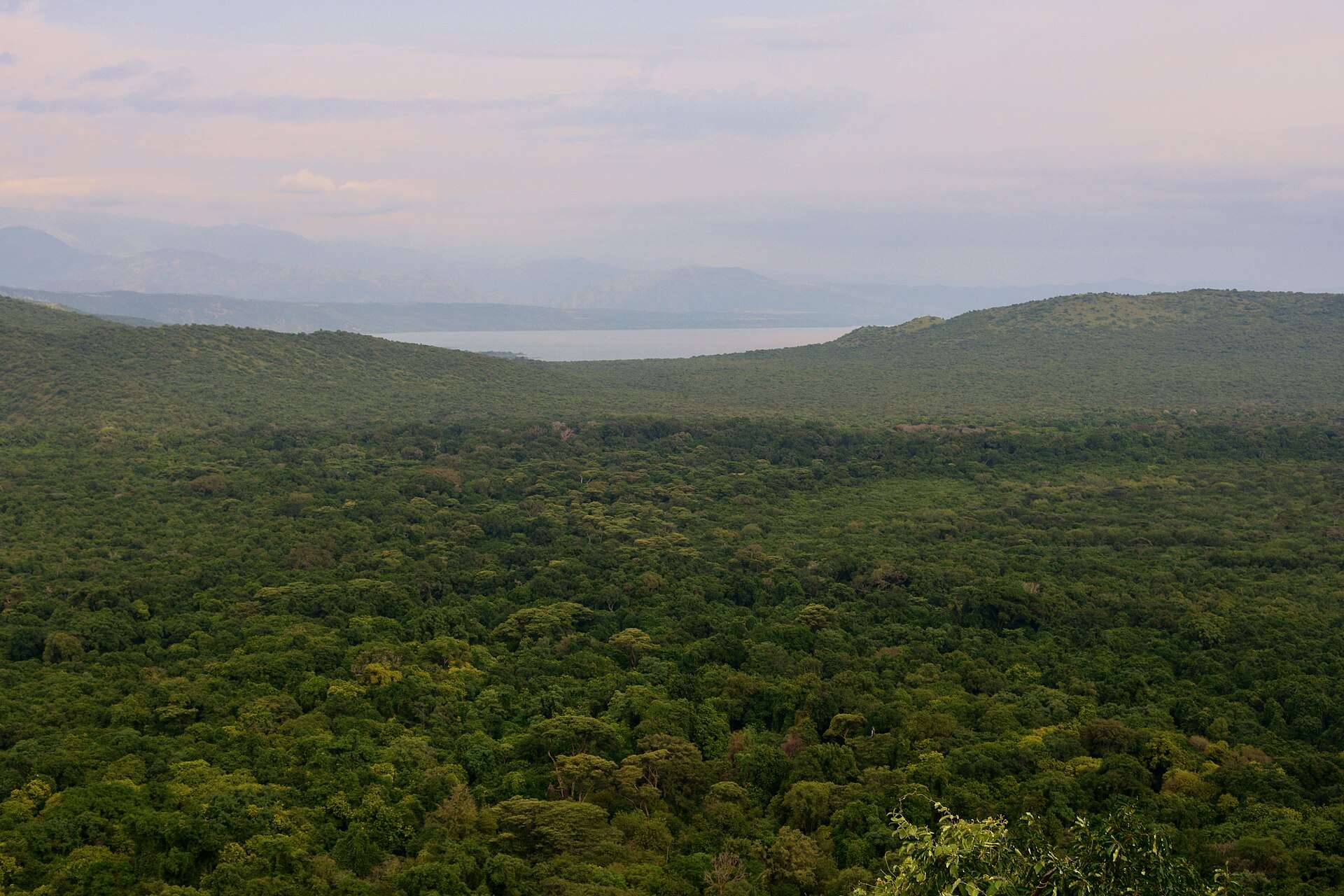 Ethiopia
With 10 days in Ethiopia right now, combine Addis Ababa, Bishoftu's crater lakes, the Rift Valley lakes, Hawassa and Arba Minch, then fly back to Addis from Arba Minch. With two weeks, slow the pace and add the Bale Mountains or more time by the lakes. The north, including Lalibela, Gondar and the Simien Mountains, isn't on the list this autumn because official advice warns against all travel to Amhara and Tigray (checked 10 October 2026).
Updated Oct 2026 · 6 min
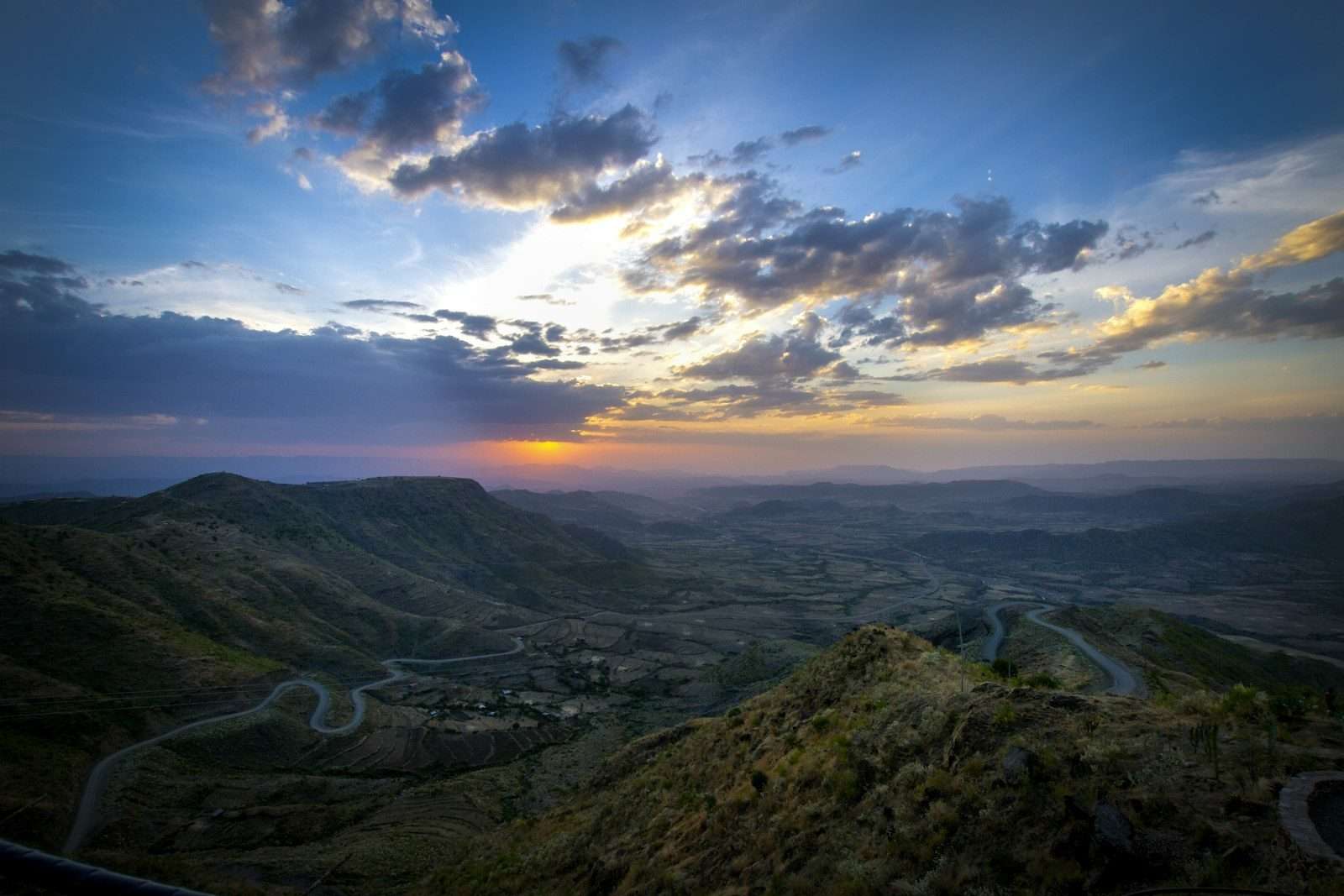 Is it safe
Yes for most of the places visitors go, as long as you choose your regions. As of 10 October 2026, Addis Ababa is calm and busy with ordinary life, and Bishoftu, the Rift Valley lakes, Hawassa and Arba Minch are open; we drive these roads regularly, by day. Travel isn't advised right now to the north (Amhara, including Lalibela, Gondar, Bahir Dar and the Simien Mountains; Tigray; and Afar, including the Danakil) or to border areas. In the cities, the everyday risks are petty theft and being out on foot after dark.
Updated Oct 2026 · 8 min
Going to Simien Mountains? Tell us where.
One fixed price for the whole car, from a real person.One fixed quote for the whole car, from a real person, on WhatsApp.